
Hot Stone Massage Benefits, Safety, and What to Expect
The room is quiet except for soft music and the faint sound of steady breath. Smooth, warmed stones rest against the skin, and their heat spreads slowly, easing that first layer of tension almost at once. In that calm, cocooned feeling, Hot Stone Massage starts to make sense before a word is even said.
At its core, Hot Stone Massage is a massage that uses heated, smooth stones, often placed on key areas of the body and worked into the session by a therapist’s hands. The warmth helps muscles feel more at ease, so the massage can feel especially soothing from the start. Because of that added heat, it stands apart from a classic massage, which relies on touch alone without that same steady, deep warmth.
That’s also why so many people return to it when stress has piled up, sleep feels off, or the body simply feels worn down. In 2026, hot stone sessions are still a favorite for relaxation, and many spas now tailor them with small touches like scent choices or lighter and firmer pressure. Even with those extras, the heart of the treatment stays simple: warmth, calm, and a slower, more settled body.
This guide will walk you through what Hot Stone Massage is, how it works, and what it may help with in everyday life. You’ll also get a clear picture of what a session feels like, who should be careful with the heat, and how to prepare so you get the most from your time on the table. If you love the feeling of warmth melting tension, or you’re thinking about booking your first session, you’re in the right place.
What Hot Stone Massage is, and how it works on the body
Hot Stone Massage is a massage style that blends skilled touch with steady heat. During the session, a therapist uses smooth, heated stones, most often basalt, and may place them on the body, hold them in the hands while massaging, or do both.
The goal is simple. Heat helps the body let go a little faster. When muscles soften, massage strokes can feel deeper and more soothing, even without a big jump in pressure. Most professional sessions use stones warmed to about 120 to 150 degrees Fahrenheit, though the exact heat depends on where the stone is used and your comfort level. A trained therapist checks the temperature before the stone touches your skin, so the warmth feels calming, not sharp or stressful.
The simple idea behind heated stones and muscle relief
Think of a tight muscle like cold butter. Push on it right away, and it resists. Warm it first, and it gives a little. That is the basic idea behind Hot Stone Massage.
The heat spreads slowly into the top layers of tissue. As that warmth settles in, the body often starts to relax on its own. Shoulders may drop. Breathing may slow. Areas that felt braced or guarded can begin to feel easier to work on.
A therapist may place stones on the back, shoulders, legs, hands, or feet. In other cases, the stones move with the massage strokes. Sometimes both methods happen in one session. Either way, the heat acts like an opening step, helping the hands do their work with less force.
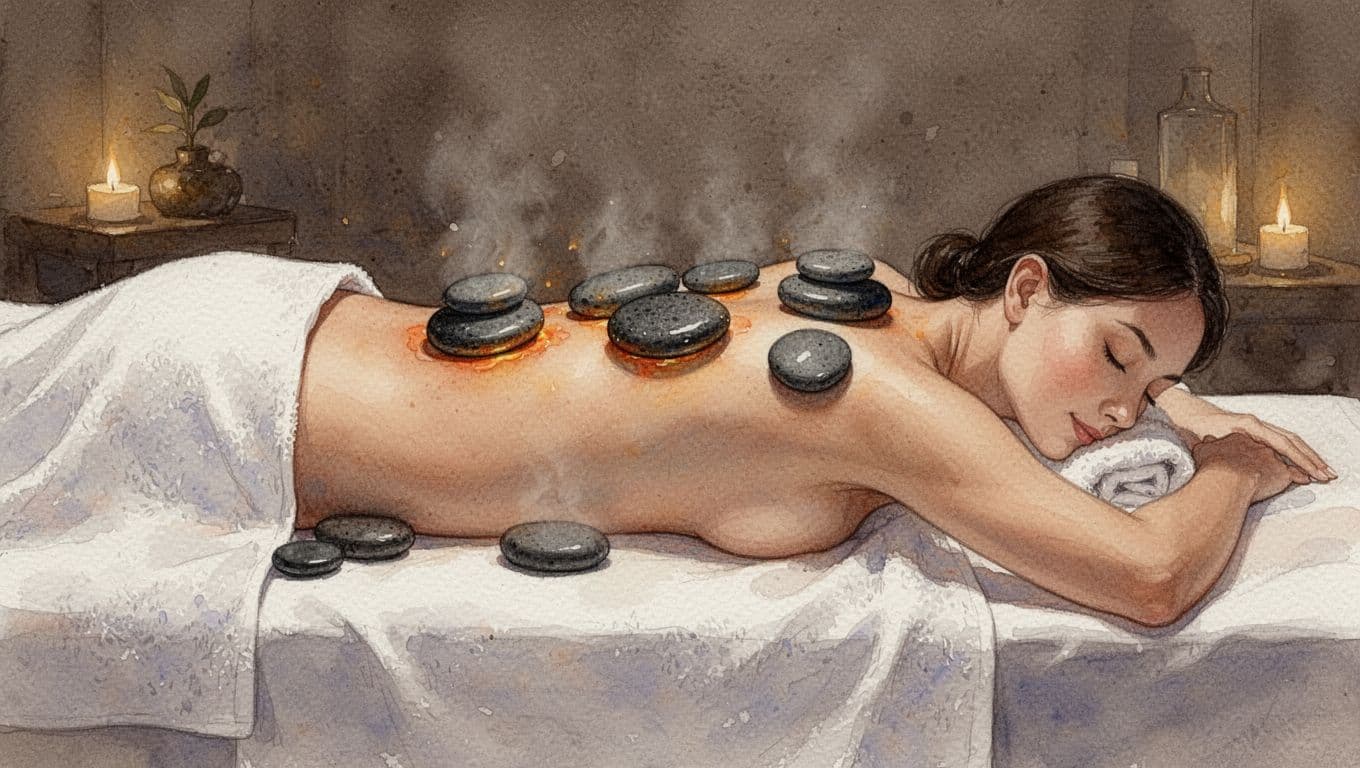
That does not mean the stones magically fix every ache. Tightness can come from stress, posture, overuse, or plain old fatigue. Still, warmth often helps stiff areas feel less guarded, which can make the whole massage feel smoother and more effective.
A few things are happening at once:
- Heat calms surface tension, so the first contact feels less jarring.
- Muscles may soften, which can make kneading and gliding feel easier.
- The body often shifts into rest mode, so you feel less braced and more settled.
In a good hot stone session, the heat should feel steady and comforting, never harsh or too intense.
That is why so many people describe Hot Stone Massage as a melting feeling. It is not only about pressure. It is also about preparing the body so pressure does not need to do all the work.
Why basalt stones are often used in professional sessions
Most professional therapists choose basalt stones because they hold heat well. Basalt is a smooth volcanic rock, usually dark in color, and it has the kind of density that lets it stay warm long enough for safe, steady use during a session.
That matters more than it sounds. If a stone cools too fast, the therapist has to stop and switch it out often. If it is rough or uneven, it will not glide well on the skin. Basalt solves both problems. It tends to be smooth, solid, and comfortable in the hand.
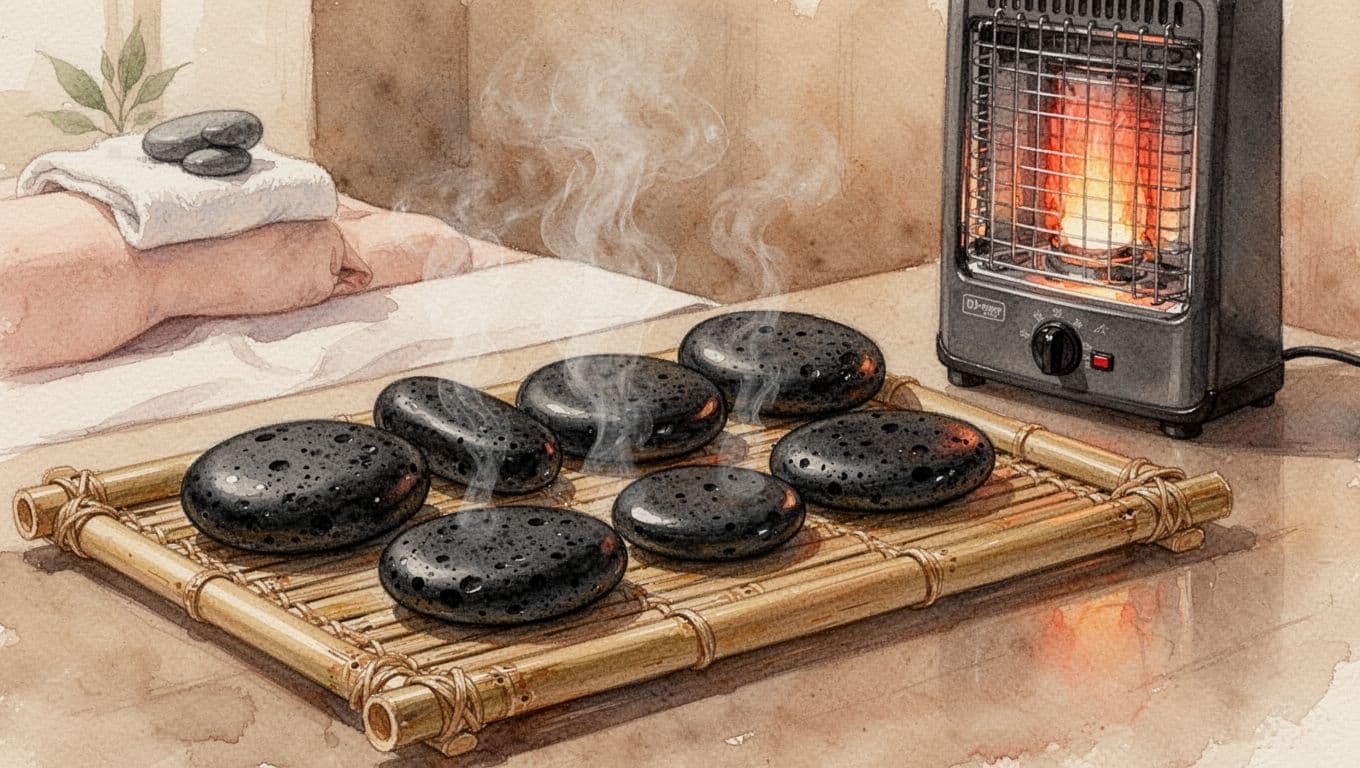
Therapists also use different sizes for different jobs. Larger stones often rest on broad areas like the back. Smaller ones fit places like the neck, hands, or between the shoulder blades. That size match helps the warmth land where it is needed instead of feeling awkward or bulky.
In a professional setting, stones are usually heated in water, not microwaved or guessed at by touch alone. The common range is around 120 to 150 degrees Fahrenheit, but trained therapists still test each stone before use. They may hold it first, move it briefly over their own skin, or adjust the contact method based on the body area.
Some therapists also bring in cold stones for contrast work. That can be useful in certain sessions, especially when they want to alternate sensations. Still, hot stone massage keeps the main focus on warmth, relaxation, and muscle release. The heated stone is the star of the treatment, not the cold one.
How hot stone massage differs from a regular massage
A regular massage relies on hands, forearms, and pressure changes to work through tension. Hot Stone Massage adds another tool, heat, and that changes the feel of the session from the start.
The first big difference is pacing. Hot stone work often feels slower and more deliberate. The therapist may pause to place stones, let the warmth settle, then move into long gliding strokes. That rhythm can feel deeply soothing, especially if your body tends to stay tense even when you are trying to relax.
The second difference is pressure. In a standard deep tissue massage, the therapist may need firmer pressure to reach stubborn areas. With hot stones, heat helps muscles soften first, so the work can feel deep without being as forceful. For some people, that is the sweet spot, enough depth to feel relief, but not so much that they spend the whole session bracing.
Here is a simple way to think about it:
| Massage type | Main tool | Typical feel | Best for |
|---|---|---|---|
| Regular massage | Hands and forearms | Can range from light to firm | General tension, maintenance, custom pressure |
| Hot Stone Massage | Hands plus heated stones | Warm, slow, deeply soothing | Stress, stiffness, and people who want depth without heavy force |
That does not mean Hot Stone Massage is always gentle. A skilled therapist can still work on problem areas. The difference is that the heat helps open the door first. Because of that, the session may feel more comforting than a regular deep tissue treatment, especially if your muscles are tight but sensitive.
For many people, that is the real appeal. It is not just massage with a warm extra. It is a different body experience, one where heat does some of the quiet work before the therapist asks the muscle to let go.
A short look at the roots of Hot Stone Massage
Hot Stone Massage may feel like a modern spa favorite, but its roots reach much farther back. Long before spa menus and heated stone sets, people in many parts of the world turned to heat and stone for comfort, relief, and rest.
That shared idea is easy to understand. Warmth softens what feels tight. A smooth stone holds heat in a steady, grounded way. Put those together, and you get something simple, physical, and deeply human.
Ancient healing traditions that used heat and stones
Across old healing systems, heated stones appeared again and again, not as a trend, but as a practical tool. People used them to warm the body, ease aches, and support a sense of balance when life, labor, or illness left someone worn down.
In Ayurveda in India, warmth played an important role in caring for the body. Healers used heated stones as part of broader wellness practices meant to calm tension and bring the body back into steadier rhythm. The goal was not luxury. It was relief, comfort, and support for overall balance.
In traditional Chinese healing, warmed stones and heat-based methods also had a place. Historical sources often mention stone tools, including Bian stones, used alongside other therapies. In some cases, heat was applied around the abdomen or other areas to ease discomfort and support the body’s natural flow and function.
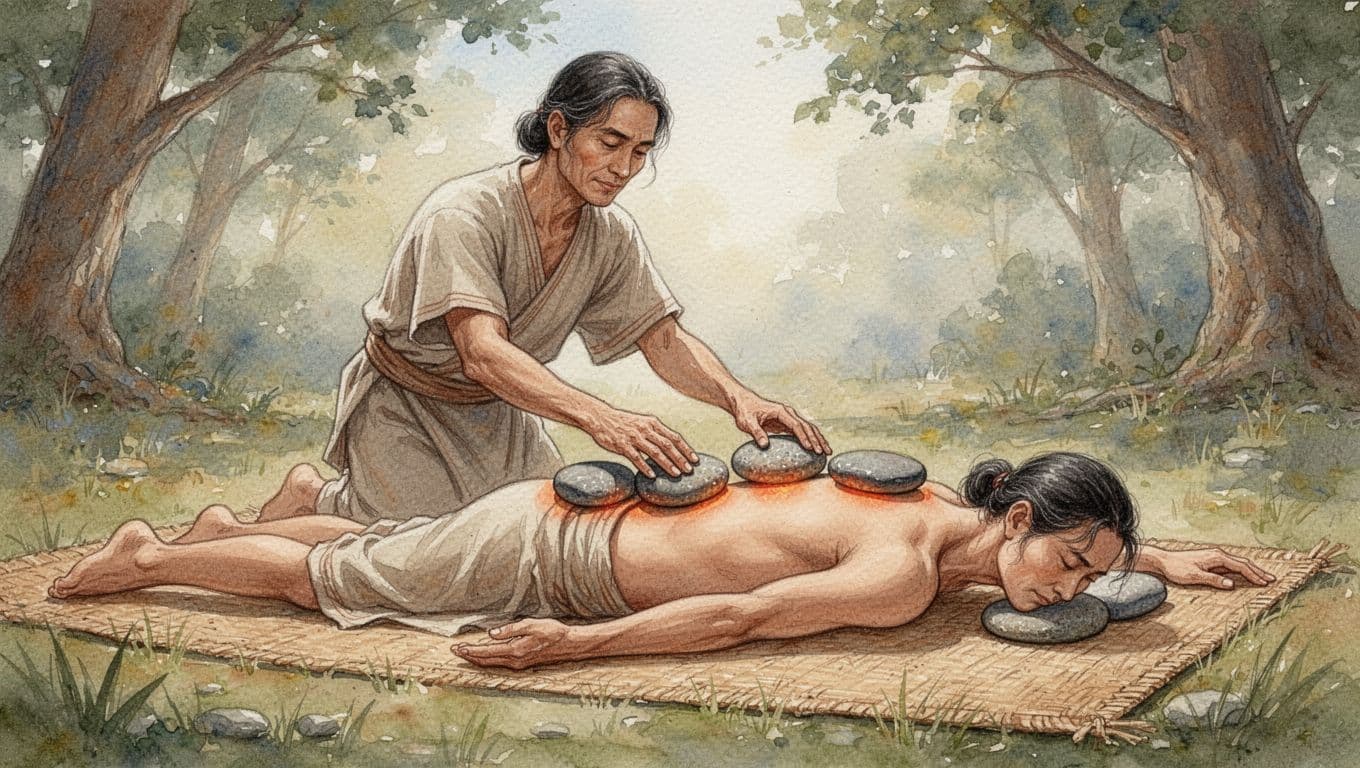
On the islands of Hawaii, traditional healing practices included the use of heated lava rocks. These stones, often wrapped before use, brought warmth to sore areas and worked well with hands-on bodywork. The image is easy to picture: volcanic stone, island heat, and skilled touch coming together in one treatment.
Other cultures also built healing around heat. Some Native American traditions used fire-heated stones in sweat lodges, where the goal was whole-body warmth and deep physical release. Meanwhile, the Greeks and Romans used hot baths, heated surfaces, and contrast between warm and cool temperatures to relax the body after strain.
A broad pattern starts to appear:
- Heat eased stiffness after work, travel, or physical stress.
- Stones held warmth well, which made them useful before modern tools existed.
- Touch and temperature often worked together, rather than apart.
The oldest roots of Hot Stone Massage are less about one single origin story and more about a shared human instinct: use warmth to help the body let go.
That matters because it keeps the history honest. No one culture owns every version of stone-based heat therapy. At the same time, each tradition deserves respect for shaping how people understood warmth, relief, and hands-on care.
How the modern spa treatment took shape
The Hot Stone Massage you book today took shape much later. While older traditions inspired the idea, the modern spa version became widely recognized in 1993, when Mary Nelson developed LaStone Therapy.
Nelson’s work helped turn scattered older practices into a clear treatment method. She used smooth basalt stones, heated them in water, and combined them with massage strokes in a structured session. That gave therapists a repeatable way to use heat safely and consistently, which helped the treatment spread through spas and massage schools.
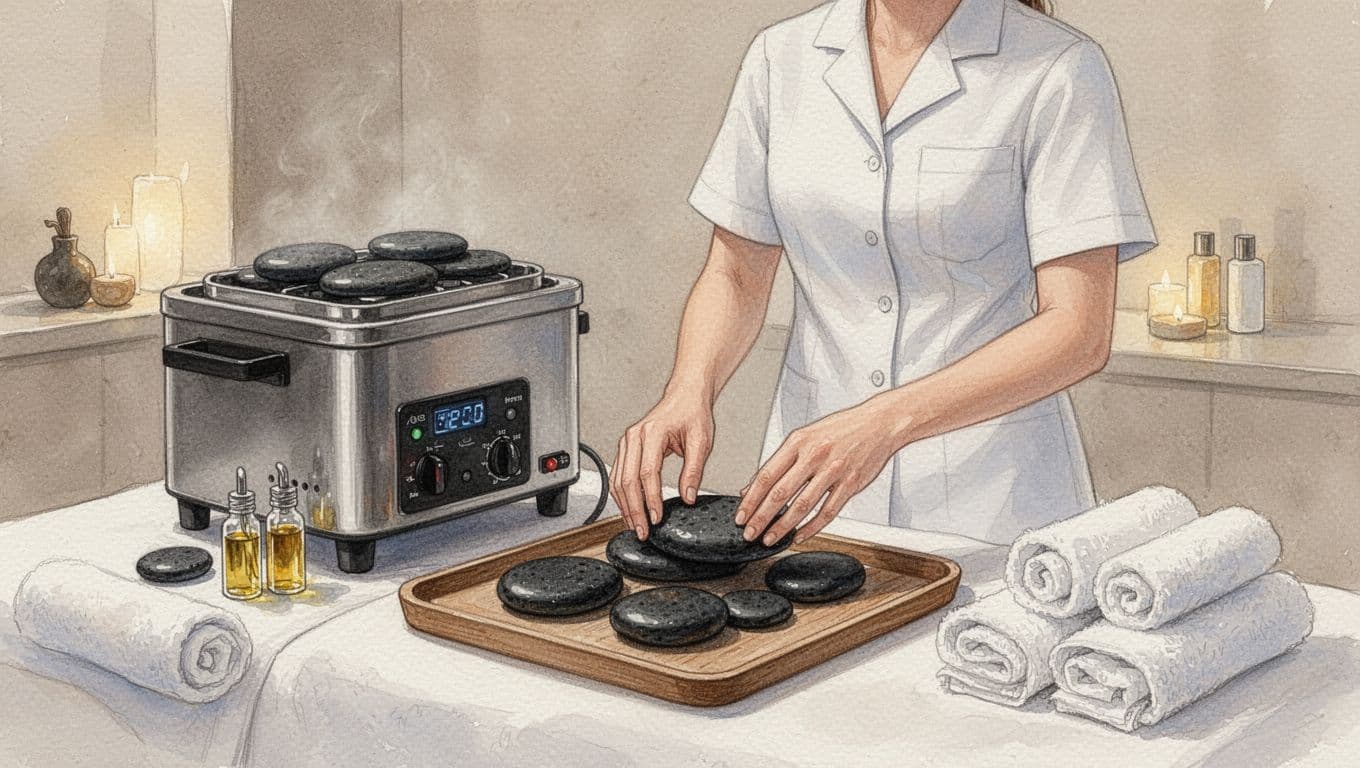
Today’s Hot Stone Massage still carries echoes of those older traditions, but it works inside a modern care setting. That means trained therapists, tested temperature ranges, clean equipment, and close attention to skin safety and client comfort. In other words, the warm stone is ancient, but the way it is used in a spa is much more refined.
That blend is part of the appeal. You get something that feels timeless, yet it rests on current standards and professional skill. The result is a treatment that honors the past without getting lost in myth, and that makes the experience feel even richer when the first warm stone touches your skin.
The real benefits people seek from Hot Stone Massage
People usually book Hot Stone Massage for a simple reason: they want to feel better in their body and quieter in their mind. Not cured, not transformed overnight, just less tight, less frazzled, and more at ease. That hope is reasonable.
The appeal is easy to understand. Heat has a way of softening the edges of the day. When warm stones meet stiff shoulders or an overworked back, the body often stops gripping so hard. At the same time, the slow rhythm of the treatment can feel like someone finally turned the volume down on stress.
Easing tight muscles, everyday aches, and post-workout soreness
For many people, this is the biggest draw. You sit too long, train hard, sleep in a twisted position, or carry tension in your neck without noticing. Then your body starts to feel like a shirt pulled too tight across the shoulders. Hot Stone Massage can help loosen that feeling.
Heat matters here because tight muscles tend to resist pressure when they’re cold and guarded. Warmth helps them soften first. As a result, the therapist may not need to work as aggressively to reach sore areas. That can make the session feel deep, but not punishing.
Common trouble spots often include:
- Neck and shoulders, after desk work or stress
- Lower back, after long drives, standing, or lifting
- Hamstrings and calves, after exercise or long walks
- Upper back, where tension likes to settle and stay
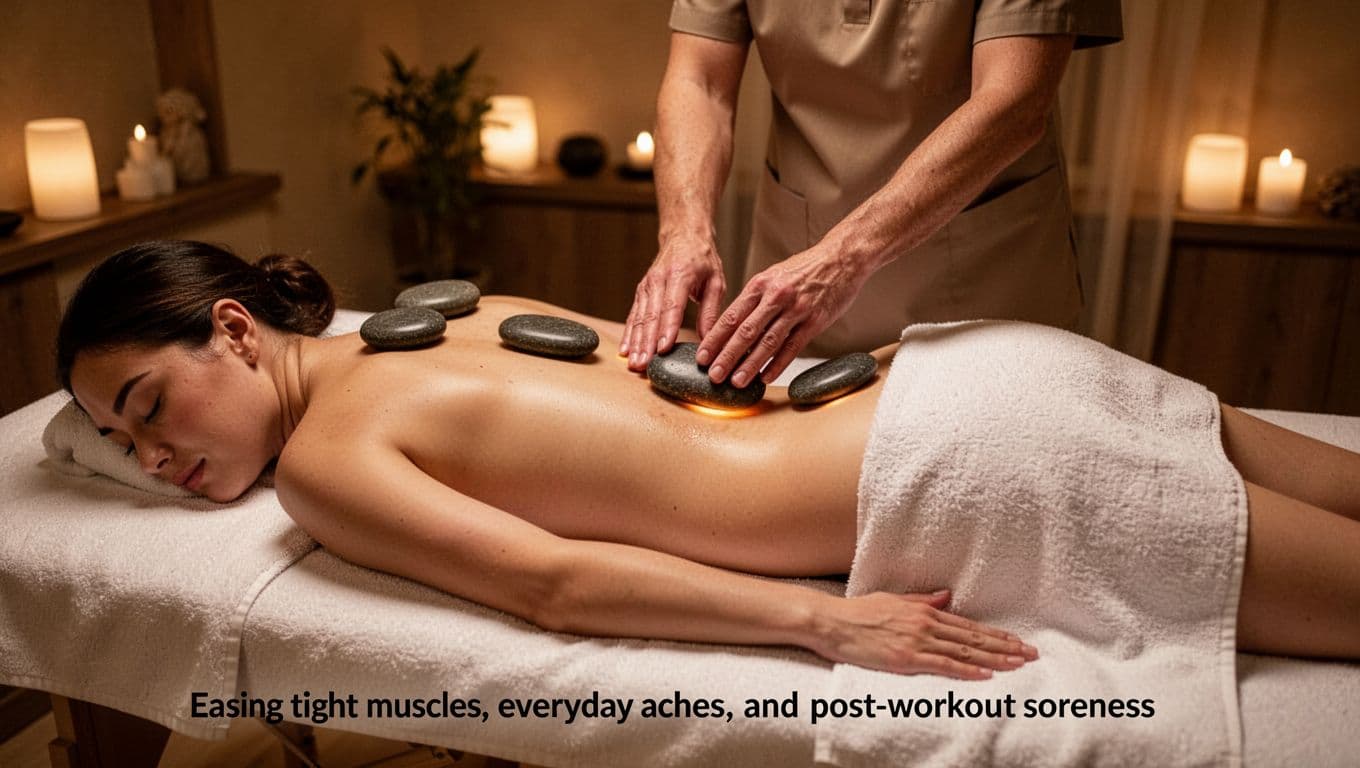
That softening effect is one reason the massage can feel so good after a workout. When muscles are heavy and sore, heat often brings a sense of relief before the hands even do much work. Some heat therapy research supports this short-term comfort, especially for muscle soreness and stiffness. There has also been 2025 reporting around massage and recovery that suggests lower post-workout soreness in some settings, but the direct evidence for hot stone massage itself is still limited. So, it’s fair to say it may help, not that it always will.
The same logic applies to everyday aches. If your back feels ropey after hours at a laptop, or your shoulders live somewhere near your ears, the warmth can act like a key in a stuck lock. It doesn’t erase the cause. Still, it may give the body a useful reset.
A few benefits people often notice right after a session include:
- Less muscle guarding
- Easier movement
- A short-term drop in stiffness
- A sense that sore areas are less sharp or heavy
Heat can make tight muscles feel more willing, which is often why hot stone work feels soothing so quickly.
That said, Hot Stone Massage isn’t a fix for every pain. If soreness is severe, keeps coming back, or comes with swelling, numbness, or injury, massage should not replace medical care. But for the ordinary wear and tear of modern life, the kind that builds slowly and settles into the back, neck, and legs, this treatment often hits the right note.
Why this massage can feel deeply calming for the mind
The mental side of Hot Stone Massage is just as important as the muscle side. In fact, many people return for the calm more than the bodywork. The room is quiet. The pace is slow. The heat is steady. Bit by bit, the nervous system gets the message that it can stop bracing.
That matters because stress rarely stays in the mind alone. It lives in the jaw, the breath, the shoulders, the belly. A warm stone resting on the back can feel almost like a hand saying, “You can let go now.” And when that happens, thoughts often stop racing quite so fast.
Part of the effect comes from the whole setting, not only the stones. The low light, the stillness, the repeated strokes, and the simple predictability of warmth can all be deeply settling. Unlike a hurried day, nothing in the room asks you to perform. You just lie there and receive.
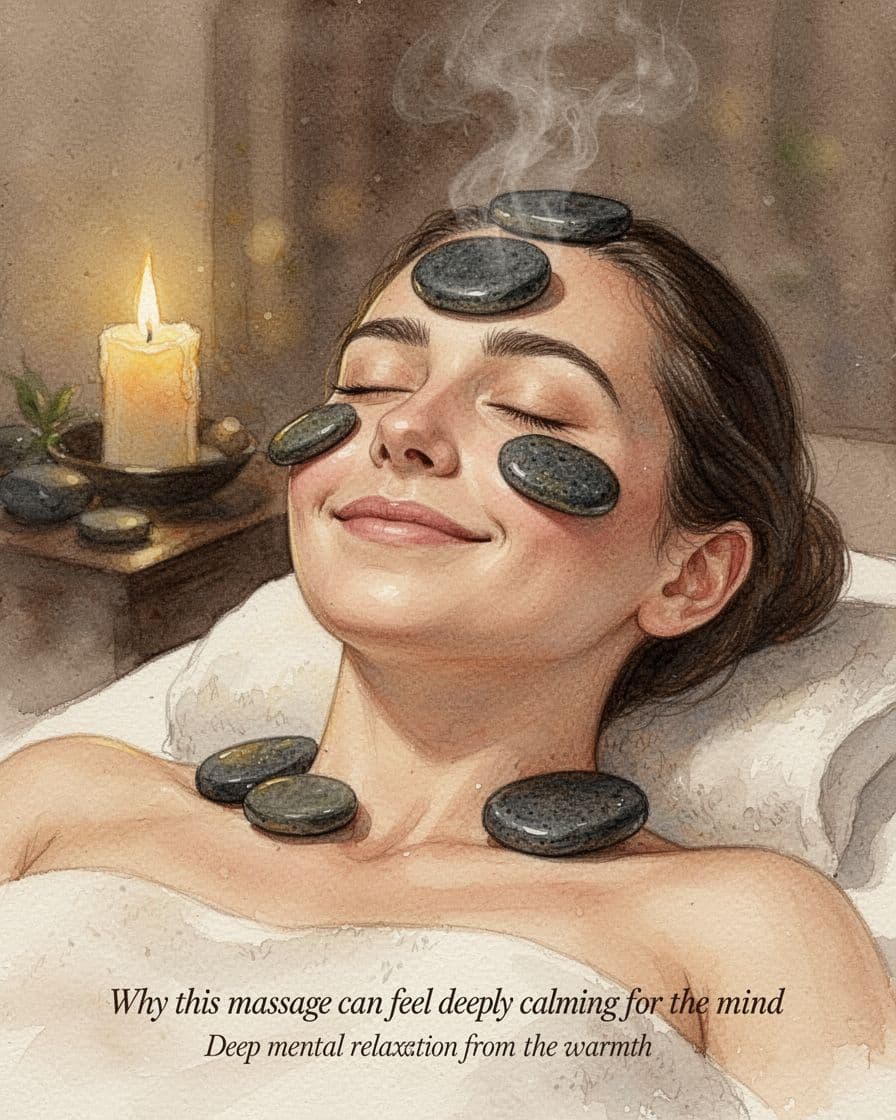
Research on massage and relaxation therapies adds some support to what people describe after a session. Studies have linked these treatments with lower stress markers, reduced anxiety, and improved mood in the short term. Heat may also help shift the body toward a calmer state, the one linked with slower breathing and a sense of rest.
That doesn’t mean every session will feel profound. Sometimes the benefit is quieter than that. You may simply notice that your thoughts are less jagged, your breath is deeper, or your body feels heavier in a good way, like it has finally landed. For someone carrying stress all week, that can be a real benefit.
Here is what people often seek on the mental side:
- Relief from stress and mental noise
- A stronger sense of calm
- A break from constant stimulation
- A mood lift that comes from feeling cared for and relaxed
In other words, Hot Stone Massage can feel like stepping out of a storm and into a warm room. The weather may still exist outside, but for a while, your whole system gets to rest.
What the research supports, and where the limits are
This is where balance matters. The research behind Hot Stone Massage and heat-based therapies points in a positive direction, especially for short-term relief. Studies and broader heat therapy findings suggest benefits for muscle tension, mild pain, soreness, and relaxation. That lines up with what many clients feel on the table and in the hours after a session.
Still, there are limits. Not every study is large, and not all of them focus on hot stone massage alone. Some combine massage, heat, and other relaxation methods, which makes it harder to say exactly how much each part contributes. Also, stronger long-term research is still limited. So while the short-term picture looks promising, the long-term claims should stay modest.
A grounded way to look at the evidence is this:
| What research tends to support | What still needs more proof |
|---|---|
| Short-term easing of tension and stiffness | Long-term relief over months |
| Temporary comfort for sore muscles | Whether results beat other massage types consistently |
| Better relaxation and calmer mood after treatment | How much the stones add beyond massage alone |
| Helpful support for stress reduction | Broad claims for complex medical conditions |
That honesty builds trust. Massage is not a cure-all, and heat is not magic. If someone has chronic pain, a medical condition, or a new injury, this treatment may be only one small part of a bigger care plan. For others, it may simply be a reliable way to feel looser and calmer for a while, and that is still meaningful.
The best way to think about Hot Stone Massage is as supportive care. It can help the body unwind. It can offer short-term comfort. It can create a real sense of calm. Those are not small things. They just need to be framed clearly, with no promises the research can’t fully back yet.
What happens during a Hot Stone Massage session, from start to finish
If you’ve never had a Hot Stone Massage, the unknown can feel bigger than it is. In real life, the session is usually calm, well-paced, and very simple to follow. You won’t be left guessing what to do, and you should never feel like you have to just tolerate discomfort in silence.
Most sessions last 60 to 90 minutes, and at many US spas they cost about $100 to $200, depending on the location and the spa itself. From the moment you walk in, the goal is comfort. The room often feels warm, dim, and quiet, with soft music and a neatly prepared table waiting under clean sheets.
How to prepare before you arrive
A little prep helps your body settle in faster. The basics are easy, and they can make the whole session feel smoother from the first touch.
Try to drink water earlier in the day, because massage tends to feel better when you’re not dry and depleted. Also, avoid a heavy meal right before your appointment. A light snack is fine, but arriving overly full can make lying on the table feel uncomfortable.
It’s also smart to get there 10 to 15 minutes early. That extra time gives you room to use the restroom, fill out any forms, and shift out of rush mode. After all, a massage starts before the therapist ever touches your back. It begins when your nervous system realizes it can slow down.
As for what to wear, keep it simple. Loose, easy clothes work best before and after the session. During the massage, you usually undress to your comfort level and lie under a sheet or towel. Professional draping keeps your body covered except for the area being worked on, so privacy stays intact.
Before the massage starts, tell the therapist anything they should know. That includes:
- Injuries, recent strains, or sore spots
- Skin sensitivity, rashes, or areas that react easily to heat
- Health conditions, especially if heat affects you strongly
- Pregnancy or major medical concerns
- Any place where you don’t want stones used
This part matters more than many first-time clients think. If you have diabetes, circulation issues, heart concerns, very sensitive skin, or a fresh injury, heat may need extra care or may not be the right fit. And if you know you run hot, say so. A good therapist would rather adjust early than guess.
If a stone feels too warm at any point, speak up right away. The therapist can switch stones, add a layer, or change the technique.
What the therapist does during the massage
Once the therapist leaves the room, you’ll get on the table and settle under the sheet. Most people start face down, with their head in the cradle, because the back is one of the most common areas for stone placement and massage work.
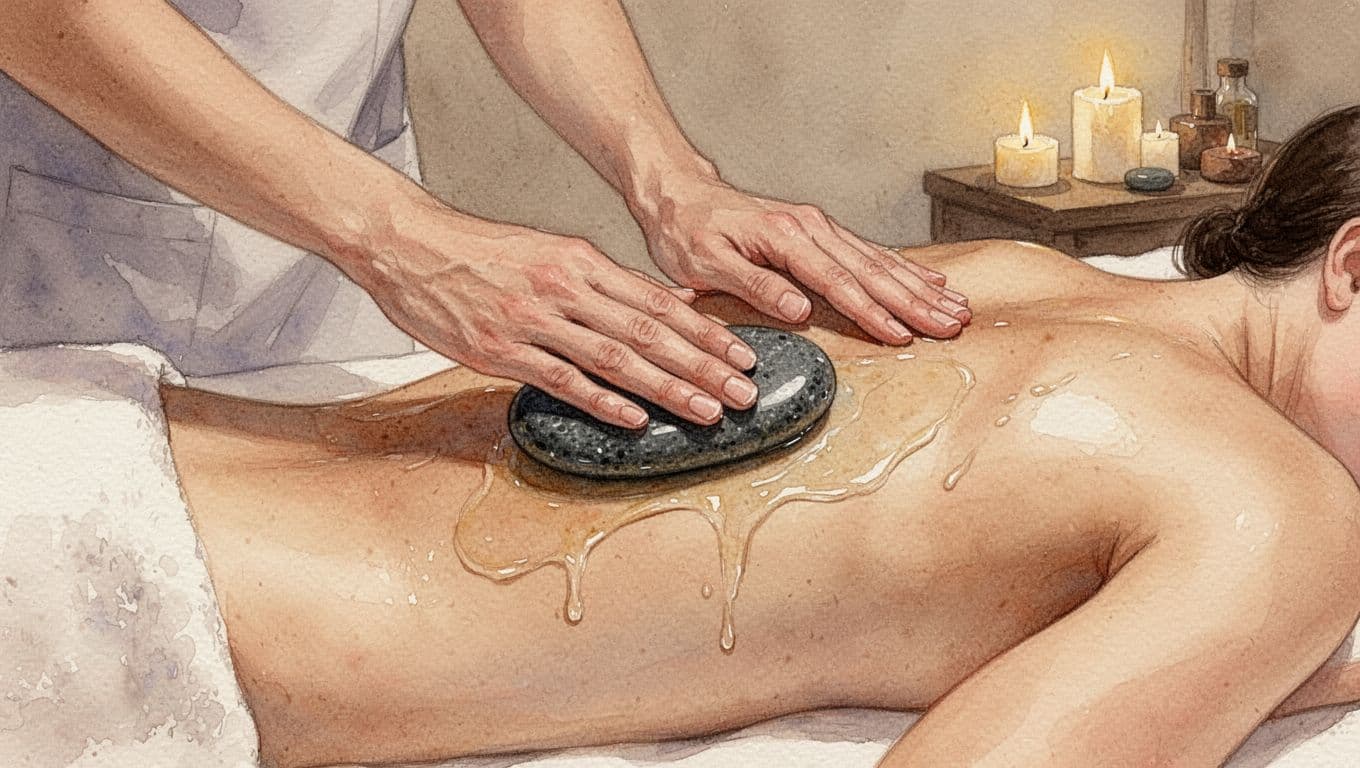
At first, the therapist may begin with their hands, not the stones. That opening touch helps them read your muscle tension and gives your body a gentle start. Then comes massage oil or lotion, which helps the stones and hands glide over the skin instead of dragging.
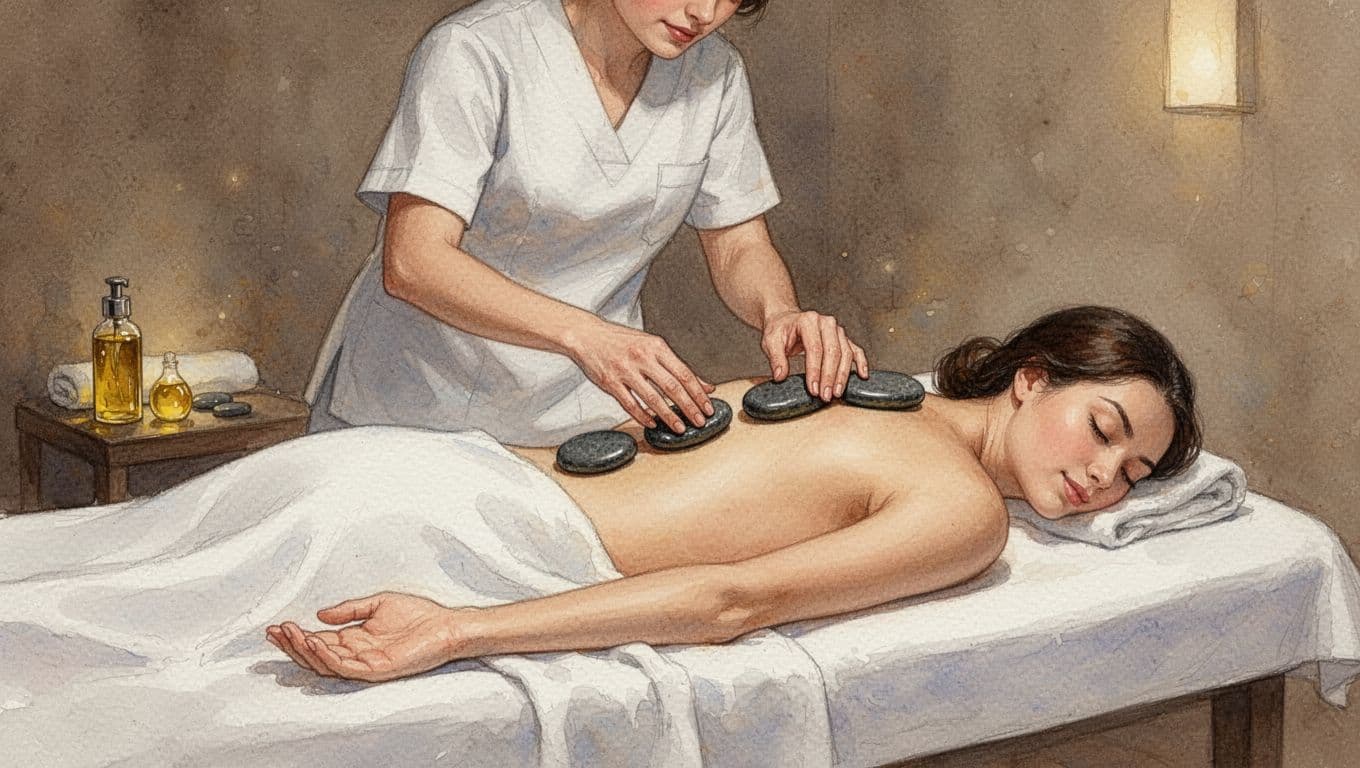
Next, the therapist usually places warm stones on broad areas such as the back, shoulders, or legs. Some stones may rest along the spine, though they are often placed beside it rather than directly on bone. Others may sit on the lower back, in the palms, or even between the toes, depending on the style of the session.
The heat doesn’t rush. It spreads slowly, like sunlight soaking into a cool floor. Many therapists let the stones rest for a short time so the muscles can soften before deeper work begins.
Then the moving part starts. The therapist holds warmed stones and uses them with long, gliding strokes across the muscles. They may sweep down the back, circle over the shoulders, or knead tight spots with both hands and stones together. Because of the oil, the stones tend to move smoothly, more like a warm river stone drifting over skin than anything sharp or heavy.
Pressure can stay light and flowing, or it can become a little firmer in places that need more attention. Even then, Hot Stone Massage often feels less abrupt than deep tissue work without heat. The warmth opens the door first, so the muscles don’t fight as hard.
Midway through the session, the therapist may ask you to turn over. This happens gently and with plenty of draping, so you stay covered. Once you’re face up, they may work on the front of the shoulders, arms, legs, neck, or feet. Some therapists also place smaller stones near the hands or feet to keep that warm, cocooned feeling going.
A full session often follows a simple rhythm:
- You settle under the sheet and relax into the table.
- The therapist begins with oil and light hand work.
- Warm stones are placed on key areas.
- Stones and hands move in slow, gliding massage strokes.
- You turn over if the session includes both sides of the body.
- The treatment ends quietly, with stones removed and a few final soothing strokes.
By the end, the pace usually gets even slower. The stones come off, the pressure lightens, and the room seems to go still.
How you’ll likely feel during and after the session
During the massage, most people feel warmth first, then a spreading sense of softness. The body can start out alert and guarded, then gradually feel heavy in the best way, almost as if it’s sinking into the table by a few extra inches.
Some people notice a dreamy, floaty feeling halfway through. Others get slightly sleepy. That’s normal. The heat, quiet, and steady rhythm can make your mind drift the way it does just before sleep, when thoughts stop bumping into each other and begin to fade.
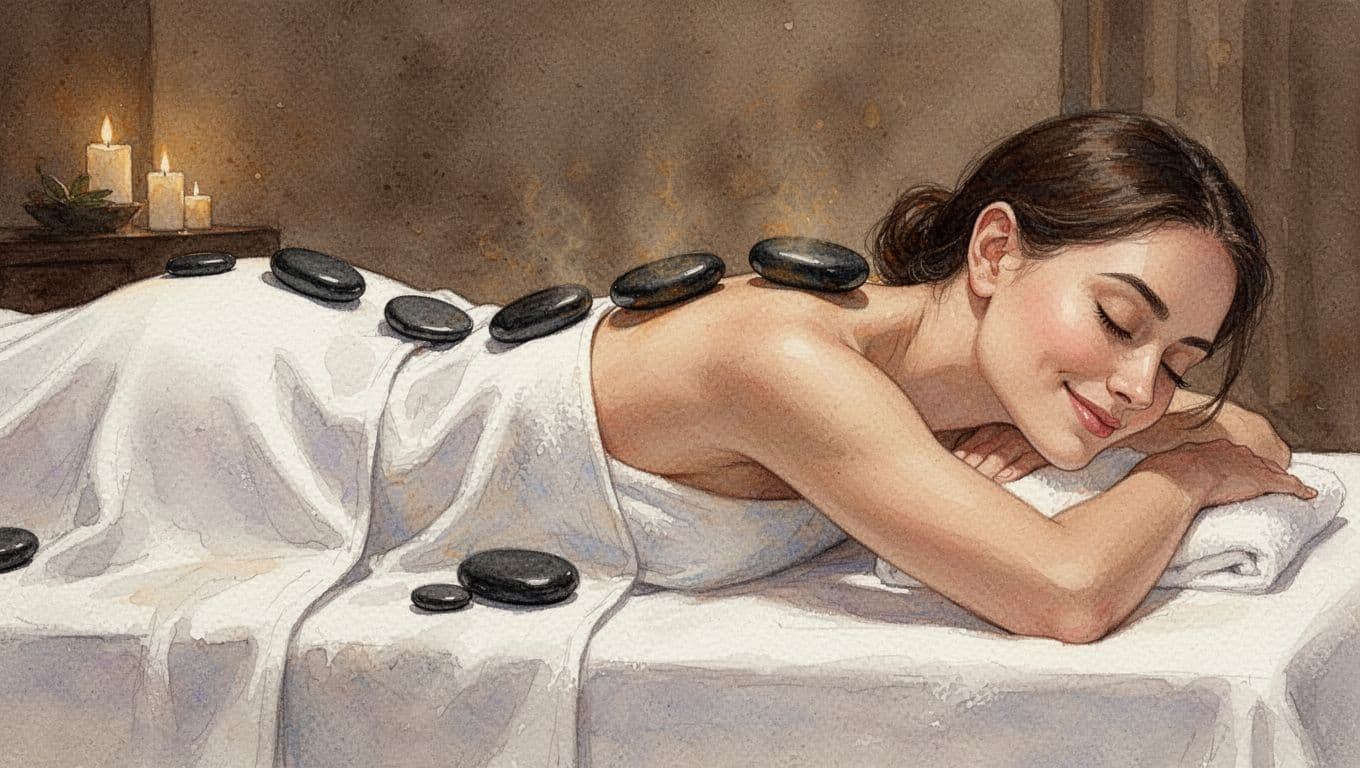
Physically, you may feel:
- Looser muscles, especially in the back, neck, and shoulders
- A pleasant sense of heaviness or grounded calm
- Mild sleepiness or mental quiet
- Less stiffness when you sit up
After the session, don’t be surprised if you move more slowly for a bit. Many people feel peaceful, warm, and deeply unhurried, like their body is still wrapped in the heat. That post-massage softness is part of the appeal.
To help the effects last, keep the next few hours simple. Drink water, have a light meal if you’re hungry, and rest if your schedule allows. If possible, skip a hard workout right away. Your muscles have just been warmed and worked on, so giving them a little space can feel better than jumping straight into intense exercise.
If you had firmer pressure, mild soreness can show up later, a bit like post-workout tenderness. Usually, it passes quickly. What most people remember, though, is the main feeling: a body that seems less clenched, a mind that’s less noisy, and a warmth that lingers after the stones are gone.
When Hot Stone Massage may not be the right choice
Hot Stone Massage can feel gentle, cozy, and deeply calming. Still, heat changes the treatment, and that matters. What feels soothing for one person can be too much for another, especially when the body is already stressed, inflamed, or less able to sense temperature clearly.
Think of heat like sunlight. In the right amount, it can feel wonderful. On already tender skin, or in a body dealing with certain health issues, it can become the wrong kind of intense. That is why it is so important to share your full health history before the session starts, even if the concern seems small.
Health conditions that call for extra caution
Some situations call for a pause, a modification, or a full skip. Open wounds, cuts, burns, and sunburn are clear examples. Heat can irritate damaged skin and make it sting, flare, or heal more slowly. The same care applies to severe skin sensitivity, active rashes, infections, or skin that already feels raw and overreactive.
A few medical conditions also raise concern because heat can put extra strain on the body. This includes certain heart conditions, uncontrolled high blood pressure, and fever or acute illness. When your system is already working hard, added heat may not feel soothing at all. It can feel like throwing another blanket on a body that is already too warm.
Reduced sensation is another major issue. If you have diabetes with neuropathy, nerve damage, or any condition that makes it hard to feel heat normally, you may not notice a stone is too hot until the skin is already irritated. That same caution applies after some injuries or surgeries where feeling has changed.
There are also body areas that often need to be avoided. For example, stones should not go over varicose veins, fresh bruises, or a recent injury or active inflammation. Heat can increase swelling and make an already angry area more reactive. During pregnancy, hot stone work may need major changes or may not be advised unless a qualified medical professional has approved it.
If you are unsure, keep it simple:
- Tell your therapist everything, even if it feels unrelated
- Check with a qualified medical professional when you have any doubt
- Do not assume “relaxing” means “safe for everyone”
That short conversation can prevent a bad experience and help you choose the right treatment.
Signs a therapist should adjust the treatment right away
During a Hot Stone Massage, comfort should feel steady and clear. Warmth is normal. Burning is not. Pain is not. Sharp discomfort is not. Your body should never feel trapped under heat that seems to rise instead of settle.
Speak up at once if you notice any of the following:
- Pain that feels stronger instead of soothing
- Burning or stinging
- Sharp discomfort in one area
- Dizziness
- Feeling faint
- Skin that feels too hot, even if the pressure feels fine
Those signs are your body’s brake pedal. Use it. A good therapist wants that feedback and should respond right away by removing the stone, lowering the heat, adding a barrier, or changing the technique. Silence helps no one here.
Sometimes people stay quiet because they do not want to interrupt the calm. That is understandable, but it is the wrong instinct. This treatment should feel like sinking into warm water, not like trying to tolerate a hidden spark on the skin. If something feels off, say it in the moment. A simple, “That feels too hot,” is enough.
In a safe Hot Stone Massage, you should never feel like you have to endure the heat.
Also pay attention after the stone is removed. If an area keeps throbbing, feels unusually hot, or looks very red, the session needs to shift. Comfort is the guide, not grit.
How trained therapists help keep the treatment safe
Safety starts long before the first stone touches skin. A trained therapist uses proper stone heating methods, checks temperatures carefully, and watches how your body responds from start to finish. This is not guesswork. It should be calm, skilled, and deliberate.
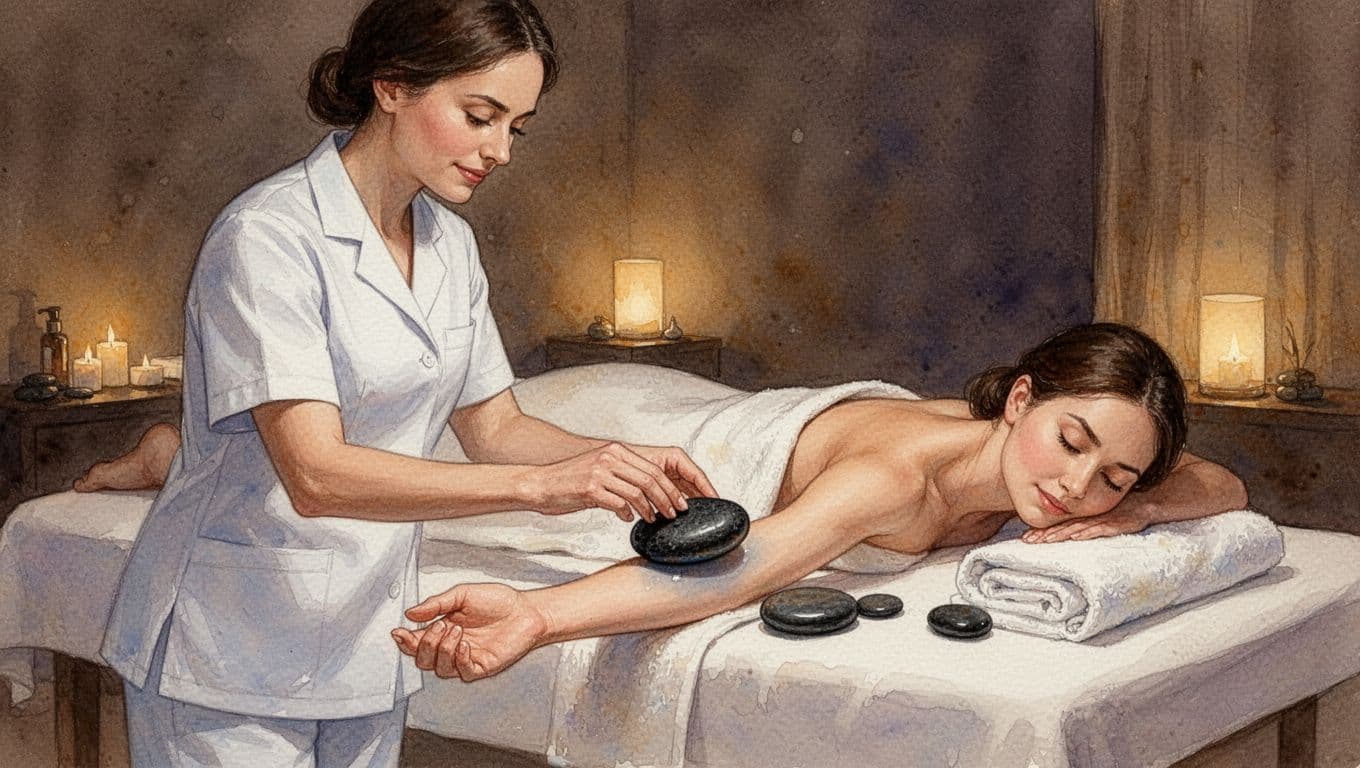
Safe practice usually includes a few basics. Stones should be heated in professional equipment with controlled water temperature, not warmed casually and used on instinct alone. Before contact, the therapist should test the stone and keep checking throughout the session, because one stone can cool while another stays too hot.
A trained therapist also uses proper draping and barriers. In many cases, stones should not sit straight on vulnerable skin without protection. Dry towels and sheets help manage heat transfer and protect modesty at the same time. That draping is not just about privacy. It is part of safe treatment.
Communication matters just as much as the equipment. A skilled therapist asks about your health, checks in during the massage, and adjusts quickly if your body says “too much.” Professional training matters because hot stone work blends massage skill with heat management. Without that training, a session can go wrong fast.
The safest sessions usually have these traits:
- Careful heating, with controlled temperatures
- Temperature checks before stones touch the body
- Thoughtful draping, with clean, dry layers where needed
- Clear communication, before and during the massage
- Professional training, so technique matches safety
In short, the right therapist does not treat heat like a small extra. They treat it with respect, because your skin, nerves, and circulation will notice every shortcut.
Popular styles, modern trends, and how to choose the right session
Not every Hot Stone Massage on a spa menu feels the same. One session may be slow, warm, and barely deeper than a sigh. Another may blend heat with firmer bodywork, cold stones, or techniques borrowed from other traditions. Because of that, the best booking choice often comes down to one thing: matching the session style to your body, your comfort with heat, and what you want to feel when you stand up.
Classic hot stone massage versus blended styles
A classic hot stone massage usually centers on heated basalt stones, broad placement, and long gliding strokes. The pace tends to be unhurried. Pressure often stays light to medium, because the heat does part of the work by helping tight muscles soften first.
Still, plenty of spas now offer blended versions, and the label alone doesn’t tell you much. One therapist may use stones mostly for placement, letting them rest on the back, shoulders, or legs while working with their hands. Another may keep the stones moving for much of the session, using them almost like warm extensions of the palms.
That difference changes the whole feel of the treatment. A placement-heavy session can feel still and cocooning, almost like lying under warm river rocks in the sun. A movement-heavy session often feels more active and rhythmic.
Some popular variations include:
- LaStone Therapy: A structured method that uses both heated and cooled stones in a set flow. It often feels more deliberate and technique-led than a standard spa version.
- Hot and cold contrast work: Warm stones relax tissue, then cool stones briefly wake the area up. Some people love the contrast. Others find it too stimulating if they want pure relaxation.
- Lomi Lomi-inspired hot stone massage: This style often uses flowing, wave-like strokes. It can feel nurturing and full-body rather than spot-focused.
- Shiatsu-influenced sessions: These may mix stone heat with pressure on key points. The touch can feel more targeted, with less oil and more pauses.
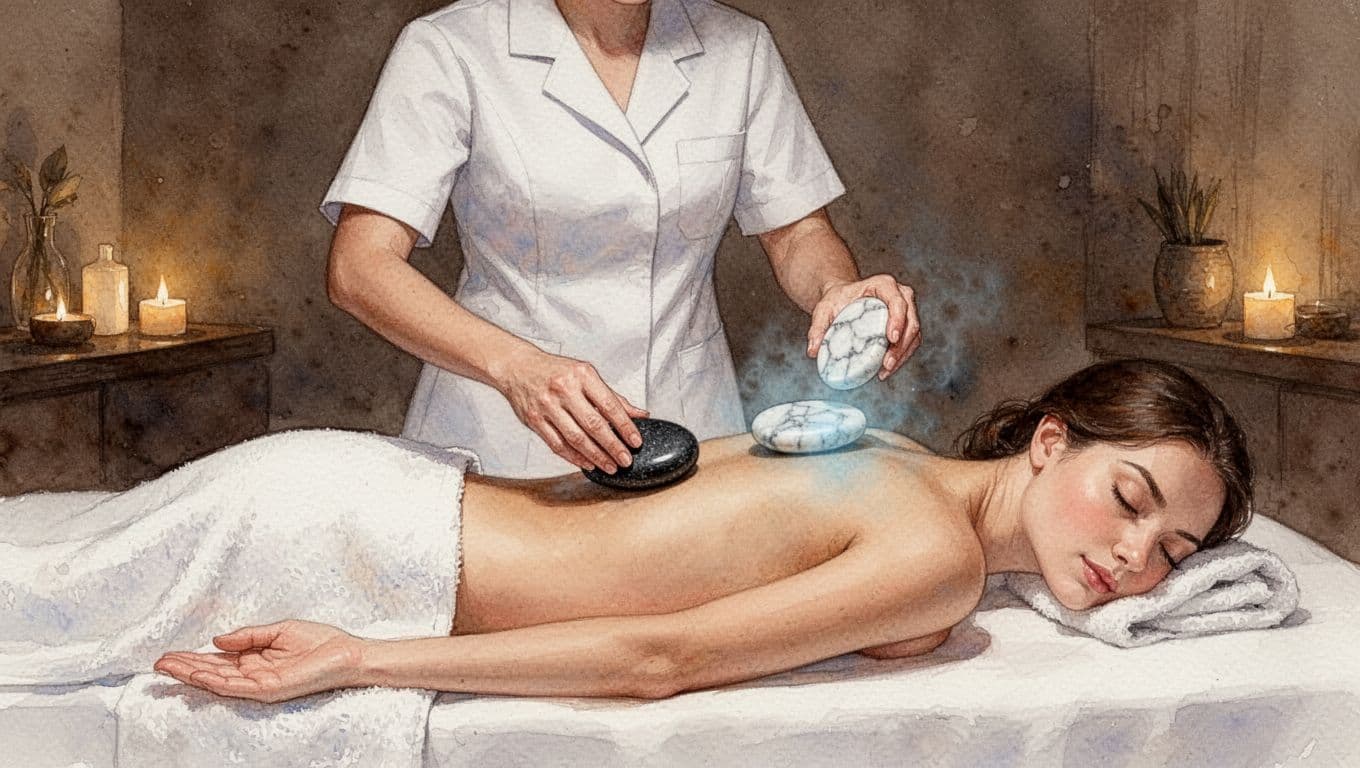
Pressure, stone placement, and pacing can shift a lot from one spa to the next. For example, one therapist may place stones only on broad muscles, while another includes hands, feet, or between the shoulder blades. Some sessions build slowly and stay dreamy. Others move into firmer work once the heat has softened the tissue.
The name on the menu matters less than the method in the room.
If you want deep relief without harsh pressure, look for a session that blends heat with focused muscle work. If your goal is pure calm, classic hot stone or a softer Lomi Lomi-inspired version may fit better.
Add-ons and trends people are seeing in 2026
As of March 2026, spas are still keeping Hot Stone Massage simple at its core, but many are adding small layers around it. The strongest trend is personalization, not novelty for its own sake. In other words, the best extras should support the massage, not crowd it.
Aromatherapy remains one of the most common add-ons. Lavender, eucalyptus, citrus, and grounding woodsy blends often appear on treatment menus. Used well, scent can shape the mood of the room and make the warm stones feel even more settling. Used too heavily, it can distract, so it’s smart to ask for a light touch if you’re scent-sensitive.
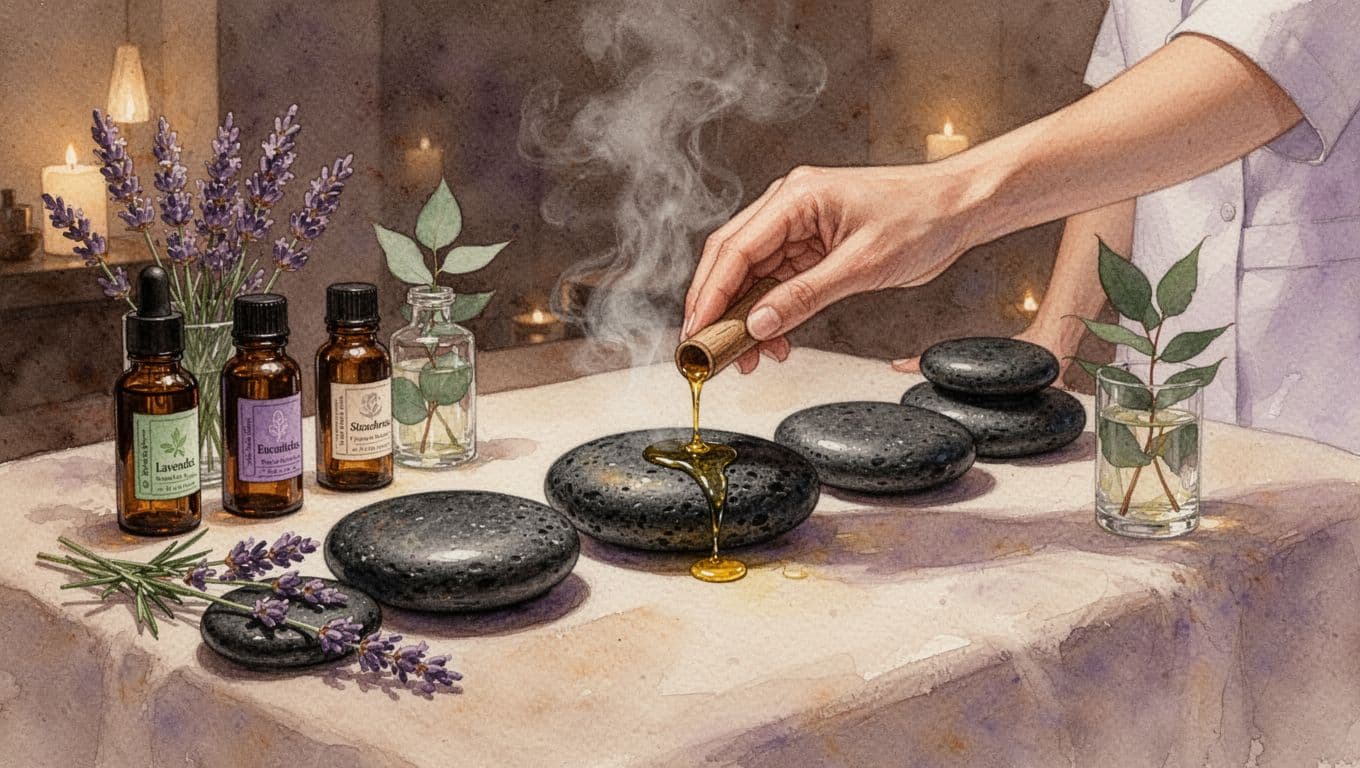
Another trend is CBD massage oil or balm, but only in places where it’s legal and where the spa offers it clearly. Some clients choose it for added comfort in sore areas. Others skip it completely. The right approach is practical, not dreamy. Ask what product they use, where it goes, and whether the session changes at all if you choose it.
You may also see:
- Geothermal or lava stone wording: Usually this points to volcanic stones, or a spa’s branding around naturally inspired heat. In practice, basalt remains the standard in most professional sessions.
- Mobile or in-home appointments: These have grown because some clients want privacy, convenience, or post-session ease without a drive home.
- Breathwork or mindfulness add-ons: Usually brief, often helpful, but best kept simple.
The trend worth trusting most is the one that makes the massage more suitable for your body, not more complicated on paper.
How to pick a great therapist and ask the right questions
A good therapist can make a standard session feel excellent. A poor fit can make even a premium treatment feel off. So before you book, look past the menu copy and focus on how the therapist works.
Start with the basics. You want someone trained in hot stone technique, not just general massage. Heat changes timing, pressure, and safety, so this isn’t a place for guesswork.
This quick checklist helps sort the strong options from the vague ones:
- Training and experience: Ask whether they have specific hot stone training, and how often they perform these sessions.
- Hygiene and setup: Stones, towels, and equipment should look clean and well-managed. Professional heating matters.
- Intake questions: A careful therapist asks about health issues, heat tolerance, injuries, and sensitive skin before you get on the table.
- Pressure style: Find out whether they work light, medium, or firm, and whether the stones are used more for placement or massage strokes.
- Temperature approach: Ask how they test stone heat and what they do if you run warm or have sensitive areas.
- Adaptability: They should be able to avoid certain spots, use barriers, reduce pressure, or skip stone placement where needed.
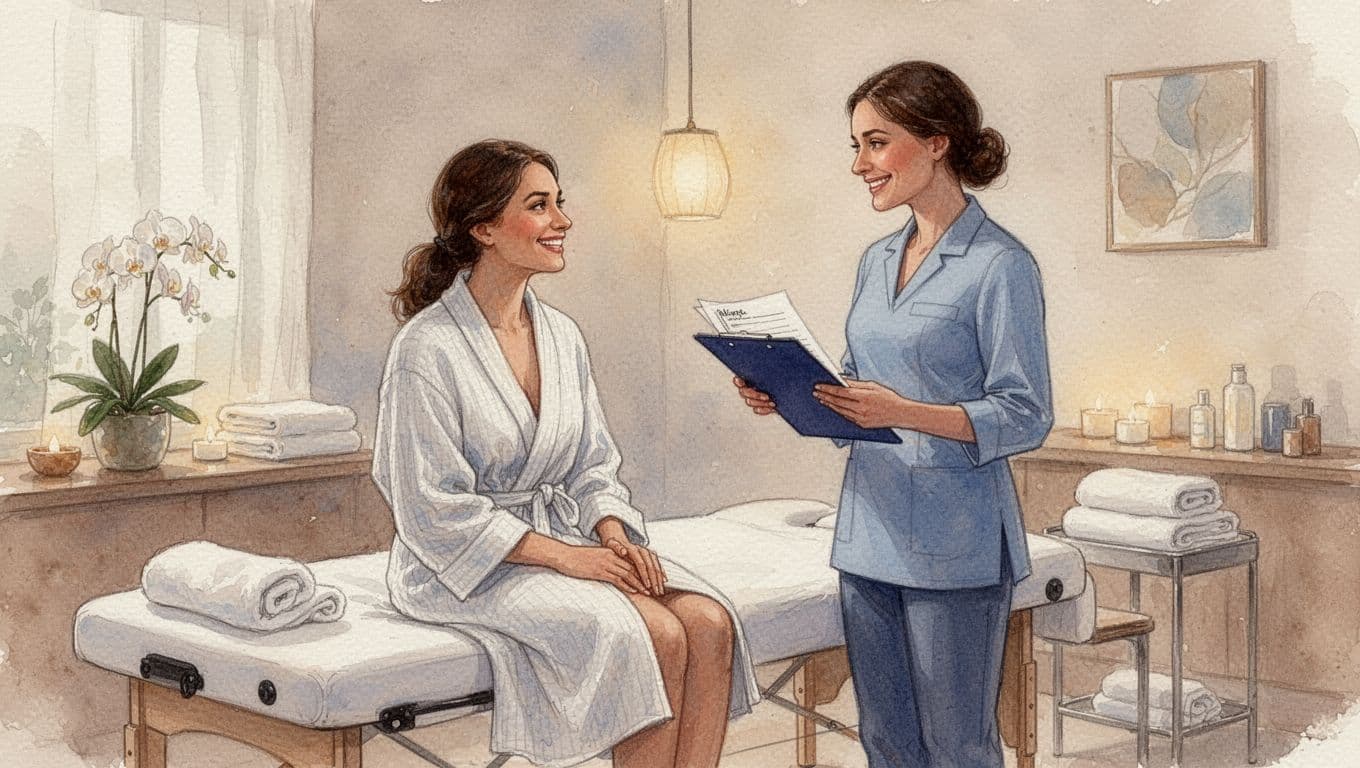
A few simple questions can tell you a lot:
- “Do you use the stones mostly for placement, massage strokes, or both?”
- “How do you handle areas that are tender or heat-sensitive?”
- “Can you keep the pressure gentle, even if I want focused work?”
- “Do you offer contrast stones, or is the session fully warm?”
The right therapist won’t sound annoyed by these questions. They should answer clearly, like someone who knows the road and isn’t guessing at the map. If they can explain their pressure style, temperature checks, and how they’ll adapt the session, you’re probably in good hands.
If you’re still deciding, keep your goal front and center. For deep calm, choose a slower classic session. For stubborn tension, book a blended style with targeted work. For a more full-body, flowing feel, try Lomi Lomi-inspired hot stone. And if you enjoy contrast and clear structure, LaStone Therapy or a hot and cold session may suit you best.
Why Harmony Massage & Spa is the Best Parlor in Kenya
If you’re planning a Hot Stone Massage and want the experience to feel worth every minute, the spa you choose matters as much as the treatment itself. Warm stones can melt tension, but the setting, the therapist, and the care behind the session are what turn a nice massage into something you remember. That is where Harmony Massage & Spa stands out.
In Kenya, plenty of places promise relaxation. Few seem to earn trust at scale. Harmony has built a strong name because people consistently walk out feeling cared for, lighter, and eager to return.
A strong reputation built on real client experience
A spa can write beautiful menu copy, but reviews tell the truer story. Harmony Massage & Spa in Nairobi has a 4.3 out of 5 rating from more than 2,580 Google reviews, which is hard to ignore. That kind of volume says more than a polished ad ever could.
What makes those reviews compelling is the pattern. Clients keep praising friendly service, skilled massage work, and real relief from daily stress and body pain. Some mention specific therapists by name, including Winnie, Chris, Gerald, and Christopher, which often points to a team people genuinely trust, not a one-time lucky visit.
A great spa does not only feel calm, it leaves a trail of happy repeat clients.
For someone booking a Hot Stone Massage, that matters. You want steady hands, good judgment, and staff who know how to read a body, not just follow a routine.
Therapists who make the massage feel personal
The best massage never feels mechanical. It feels as if the therapist is listening through their hands, finding knots, easing pressure where needed, and knowing when to slow down. Reviews about Harmony often point to exactly that kind of care.
Clients describe massages as thorough, knowledgeable, and deeply relieving. That is a big reason Harmony rises above the average parlor. A hot stone session should feel like warmth with purpose, not heat for show. When the therapist knows how to work with tension, the stones become more than a spa extra. They become part of a treatment that feels thoughtful from start to finish.
For many guests, that personal touch shows up in simple but important ways:
- Attentive pressure adjustments, so the massage suits your comfort level
- Targeted bodywork, especially for common pain points like the back, neck, and shoulders
- Professional warmth, which helps you relax before the first stone is even placed
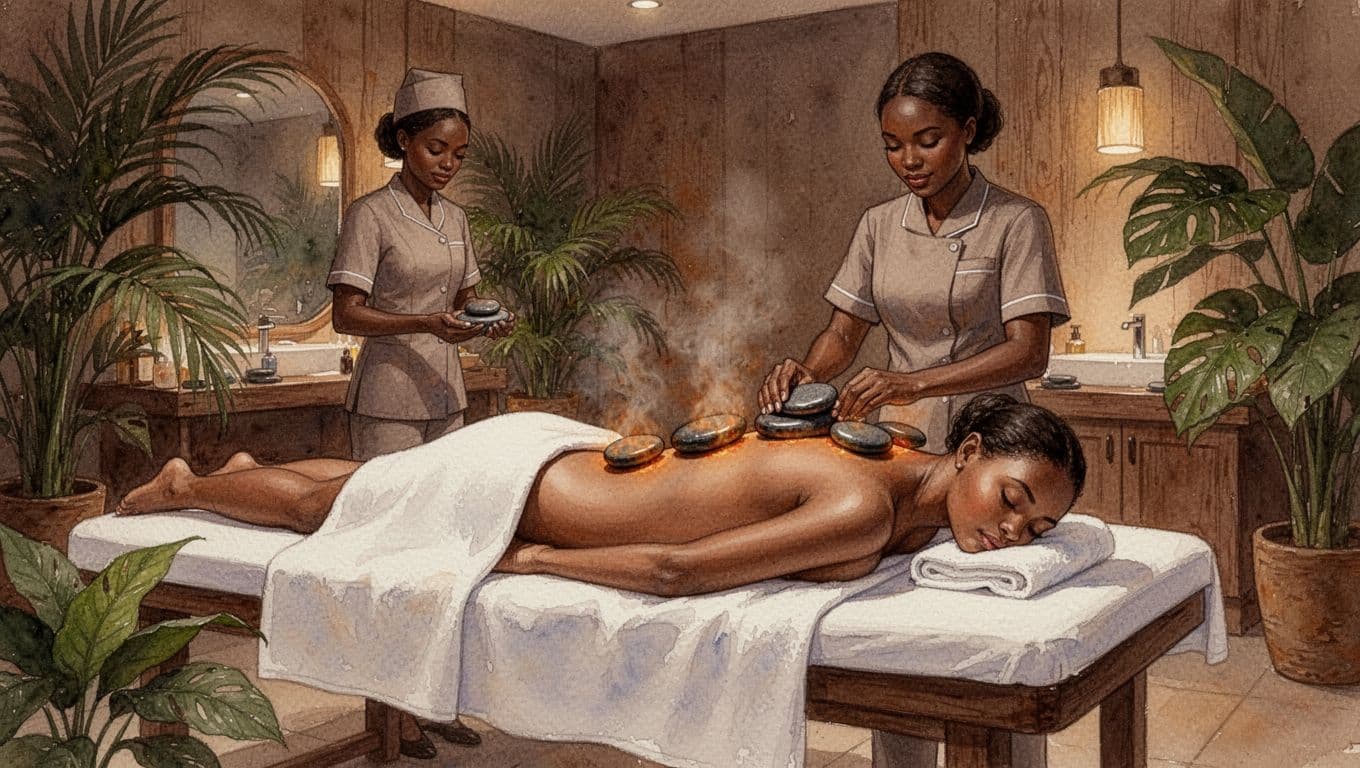
That human element changes everything. After all, a Hot Stone Massage should feel like a conversation between heat, touch, and trust.
Clean, calming, and worth returning to
Even a skilled massage can lose its magic in the wrong setting. Harmony appears to avoid that problem. Reviews describe the space as clean, private, and professional, which is exactly what you want when you’re trying to settle into a slow, heat-soaked treatment.
Privacy matters because relaxation needs room. Cleanliness matters because comfort starts with trust. A professional atmosphere matters because it helps you let your guard down. Put those together, and the whole session feels smoother, from check-in to the final exhale on the table.
Harmony also seems to handle bookings well, including last-minute requests. That may sound small, yet it speaks to good service behind the scenes. When a spa is responsive and organized, the calm starts before the massage begins.
Why it’s an easy recommendation for Hot Stone Massage lovers
No current web source clearly confirms that Harmony Massage & Spa specifically lists Hot Stone Massage on its menu. So it would be unfair to promise that exact service without checking first. Still, based on its reputation for skilled massage, strong client satisfaction, and a polished spa experience, Harmony remains a smart pick for anyone who loves bodywork and wants a high standard of care.
If Hot Stone Massage is your favorite style, Harmony has many of the right signs:
- A trusted team with strong public feedback
- Consistent praise for effective, hands-on massage work
- A calm environment that suits heat-based relaxation well
- Professional service that helps the whole visit feel easy
In short, Harmony Massage & Spa earns its reputation the old-fashioned way, by giving people a good reason to come back. And when you’re craving the slow, melting comfort of a Hot Stone Massage, that kind of trust is gold.
Conclusion
Hot Stone Massage brings together two simple things the body tends to welcome, skilled touch and steady heat. That mix is why so many people love it. The warmth can help tight muscles soften, the slow pace can quiet a busy mind, and the whole session often leaves you feeling more settled in your own skin.
Still, the best way to think about Hot Stone Massage is with balance. It may ease everyday tension, mild soreness, and stress in the short term, but it isn’t a cure for every kind of pain. When heat feels good and the session is done well, it can be a deeply comforting form of care. When health concerns, skin sensitivity, or poor technique enter the picture, caution matters just as much as comfort.
That’s why the right therapist makes such a difference. Choose someone trained, speak up if a stone feels too warm, and share any health issues before the session begins. In that way, the treatment becomes more than a pleasant hour on the table. It becomes a quiet practice in self-care, body awareness, and listening to what your body needs.
If Hot Stone Massage has been calling to you, trust that instinct, but bring good judgment with you. The best sessions don’t just melt tension for a while, they remind you how calm, soft, and at home in your body you can feel.