
Thai Massage Benefits, Techniques, and What to Expect
Picture a quiet room, soft light, and a padded floor mat waiting beneath you. You’re dressed in loose, easy clothing as steady hands press along tired muscles, then guide your body through slow, careful stretches. The pace feels calm, but the effect is waking, as if your body can finally exhale and stand taller.
That’s the heart of Thai Massage. It’s a traditional bodywork practice that blends acupressure, assisted stretching, and mindful movement into one flowing session. Instead of oil and long gliding strokes, it uses rhythmic pressure, gentle rocking, and yoga-like positions to ease tightness and restore balance.
What makes Thai Massage stand out is the way it can feel deeply relaxing and surprisingly energizing at the same time. During a session, you might notice firm pressure through your palms, feet, elbows, or legs, followed by stretches that open stiff hips, shoulders, and back. As a result, many people leave feeling lighter, looser, and more alert.
This guide will walk through where Thai Massage comes from, how its core techniques work, and why so many people turn to it for stress relief, flexibility, and muscle comfort. You’ll also get a clear sense of what a session feels like, when to take extra care, and how to choose a skilled therapist you can trust.
If you’ve been curious about Thai Massage, this is a good place to start. It has a long history, a distinct style, and a feel that’s unlike most other forms of bodywork. Once you know what to expect, it’s easier to see why this practice has stayed so loved for generations.
What Thai Massage is and how it works
Thai Massage is a fully clothed, mat-based bodywork practice that blends pressure, stretching, rocking, and guided movement. Unlike oil massage, it does not focus on long, slippery strokes across the skin. Instead, the therapist works through your clothes and uses hands, forearms, elbows, knees, and sometimes feet to release tight areas and help your body move with less strain.
At its core, Thai Massage aims to ease tension and restore flow. In traditional teaching, that flow moves through sen lines, which are pathways linked with energy and well-being. You do not need to believe in energy medicine to understand the session, though. In plain terms, the work combines firm touch, steady rhythm, and assisted stretches to help muscles soften, joints open, and the whole body feel more awake.
The roots of Thai Massage, from ancient healing to modern wellness
Thai Massage has deep roots, and that history still shapes how it feels today. Its story reaches back more than two thousand years, with ties to Indian Ayurveda, early Buddhist healing, and temple-based teaching. Over time, those threads came together in Thailand and formed a practice that treated the body as something connected, not a collection of separate sore spots.
A well-known figure in its origin story is Jivaka Kumar Bhaccha, often named as an early healer linked to Buddhist tradition. Monks helped pass the methods along, often by memory and practice rather than books. Later, Wat Pho in Bangkok played a major role in keeping Thai Massage alive by preserving massage knowledge in temple carvings and formal teaching.

That long path from temple courtyards to modern wellness rooms gives Thai Massage its special feel. It still carries a sense of care, rhythm, and tradition, even in a quiet spa setting.
The core techniques that make Thai Massage feel so different
What makes Thai Massage stand out is the way the therapist works with your whole body, not just one tense muscle. Pressure often starts with the thumbs and palms, which press along the body’s lines and major muscle groups. Then the work may deepen with forearms or elbows, especially in broad, tight areas like the back, hips, and legs.
The session usually moves in a slow, linked sequence. You may feel compression, where steady pressure sinks into a muscle, followed by gentle rocking that helps the area let go. At other times, the therapist may guide you into twists, hip openers, or long stretches that feel a bit like yoga, except you do not have to do the work.
That is why many people call Thai Massage “lazy yoga.” You are relaxed, but your body is still being moved, lengthened, and repositioned. A typical session may include:
- Thumb and palm pressure: Targets tight spots and creates a steady, grounding feel.
- Elbow pressure: Reaches deeper tissue without rushed force.
- Rocking and compression: Helps the nervous system settle while muscles soften.
- Assisted stretches and twists: Improve range of motion and leave the body feeling longer and lighter.
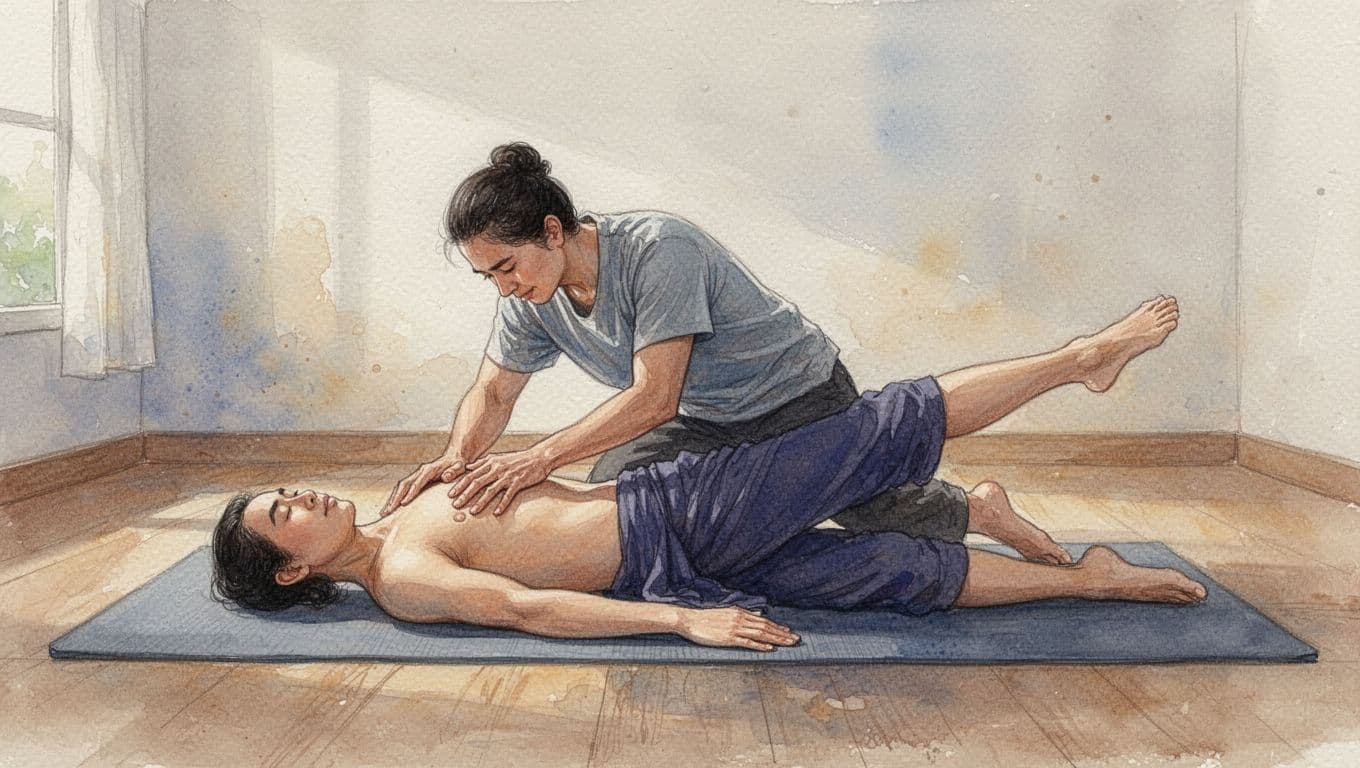
Thai Massage often feels less like passive massage and more like a guided reset for the whole body.
Why the mat, the clothing, and the slow rhythm matter
The setup is not just a tradition, it changes the whole experience. Thai Massage is usually done on a firm floor mat, not a raised table, because the therapist needs space and stability to move around you. That makes stretches easier, body positioning safer, and the session more grounded from start to finish.
Loose clothing matters for the same reason. Since there is usually no oil in a traditional Thai Massage session, you can bend, twist, and stretch without feeling slippery or exposed. The fabric creates a simple barrier, while still letting the therapist apply clear, direct pressure.
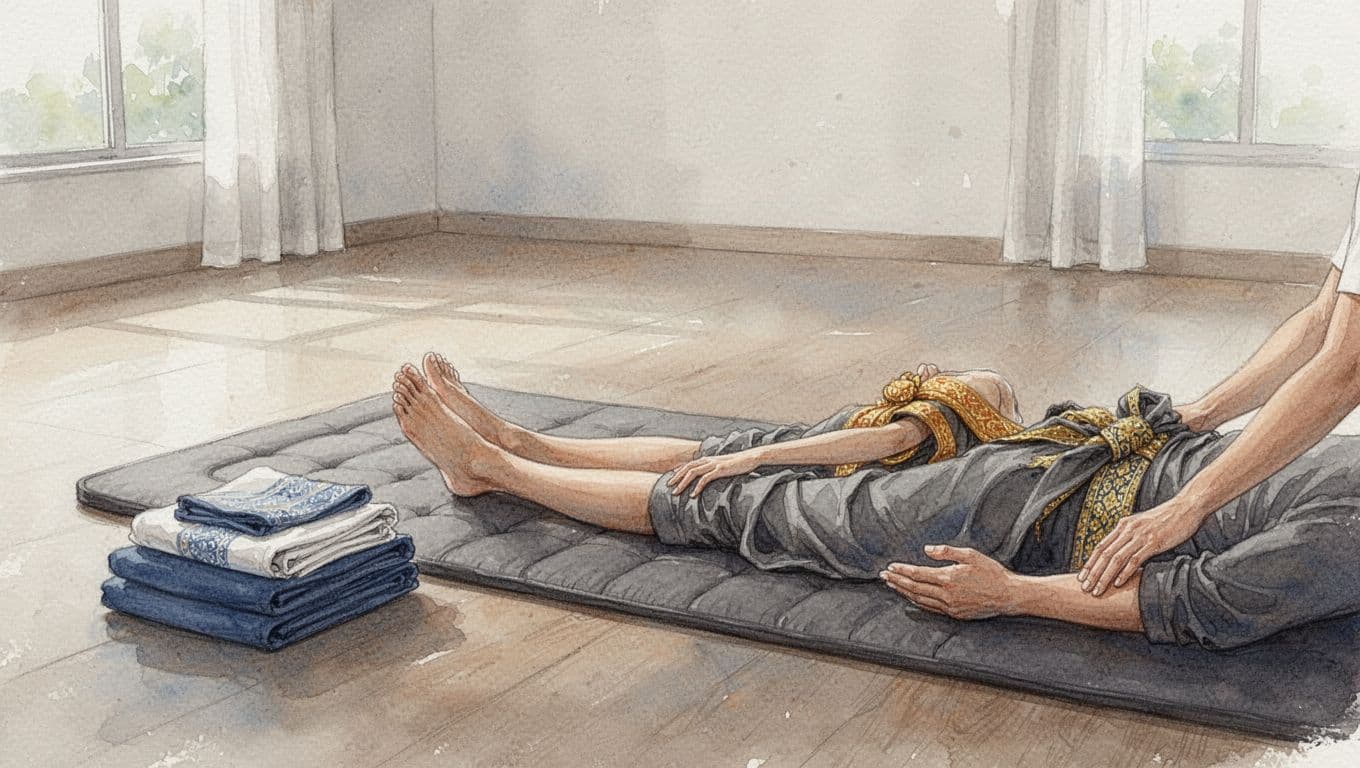
Then there is the pace. Thai Massage usually unfolds with a slow rhythm, and that matters more than most people expect. The body often lets go in stages, like a knot loosening one loop at a time. Because of that calm tempo, the work can feel steady and strong without feeling rushed.
The real benefits of Thai Massage for body and mind
Thai Massage has a way of meeting you where life shows up in the body. Sometimes that means a neck that feels like a clenched fist. Other times, it’s a low back that complains after hours in a chair, or legs that feel heavy at the end of the day. A good session doesn’t promise magic, but it often helps the body feel less guarded and more at ease.
Part of the appeal is that Thai Massage works on more than one level at once. The steady pressure can calm an overworked area, while the assisted stretches invite the body to move with less resistance. As a result, many people notice not just less tension, but better posture, easier breathing, and a clearer sense of where their body is holding stress.
How Thai Massage can help ease tension, stiffness, and everyday aches
Daily life leaves marks. Hours at a desk can pull the shoulders forward, tighten the chest, and make the neck feel like it’s carrying a backpack of bricks. Long commutes, hard workouts, and poor sleep can do the same. Thai Massage often helps by using targeted pressure and slow stretching to coax those tight spots into letting go.
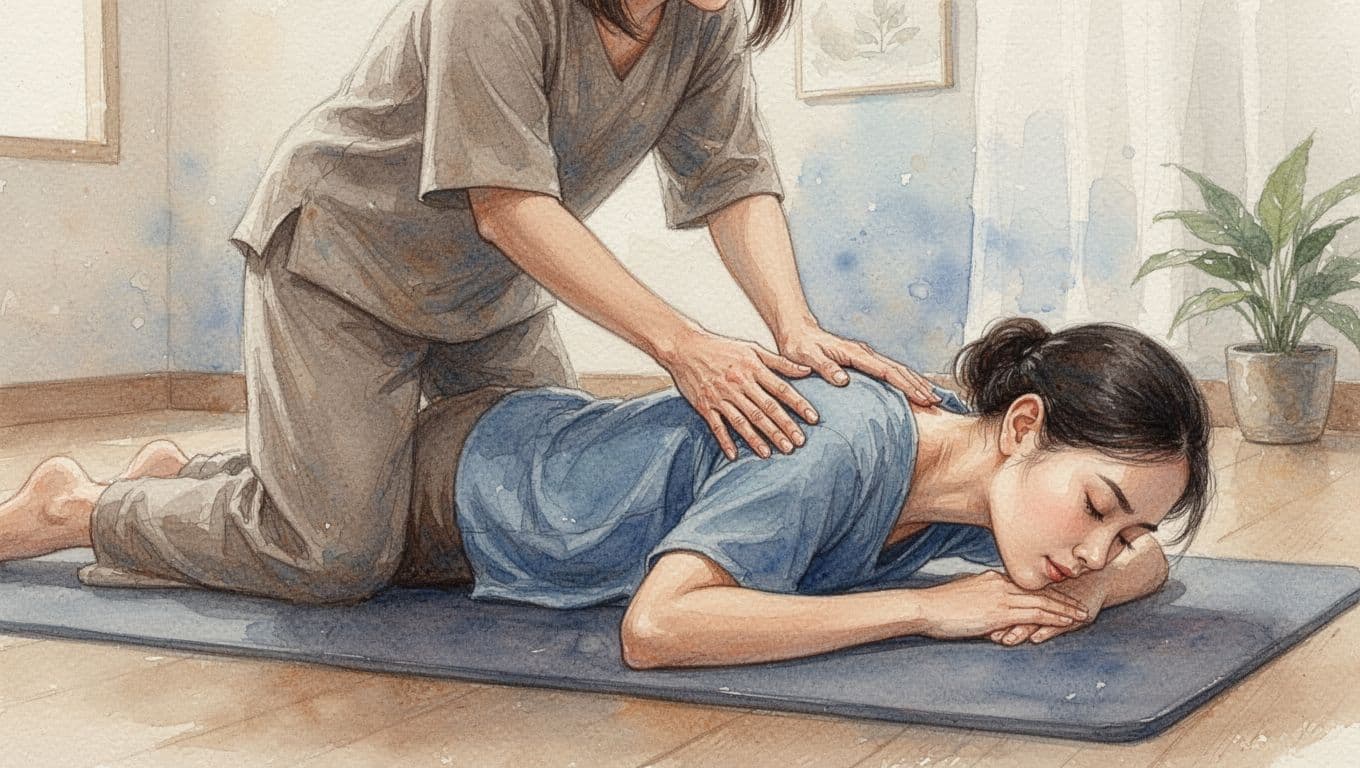
For neck tightness, the work usually focuses on the upper back, shoulders, and the base of the skull. That matters because tension rarely stays in one tiny spot. When pressure softens the muscles around the shoulder blades and chest, the neck often gets a chance to stop gripping so hard. In simple terms, it’s like loosening the knots in one part of a rope so the whole line can relax.
Back discomfort often responds well to this whole-body approach too. Instead of pressing only where it hurts, Thai Massage may work through the hips, glutes, and hamstrings first. Those areas can tug on the lower back all day without you noticing. When they ease up, standing and walking may feel smoother and less strained.
Tired legs are another common reason people book a session. If your calves feel tight, your feet ache, or your thighs feel heavy after standing or exercise, rhythmic compression can feel especially helpful. The pressure acts almost like a reset button. It encourages blood flow, reduces that packed-in feeling, and leaves the legs feeling lighter.
Desk-related stiffness usually shows up in a familiar pattern:
- Neck and shoulders: From leaning forward and holding stress high in the body.
- Mid and low back: From sitting still too long and losing easy spinal movement.
- Hips and hamstrings: From shortened sitting posture that makes standing feel stiff.
- Wrists and forearms: From typing, gripping, and repetitive hand use.
Thai Massage can help because it doesn’t treat the body like separate parts on a checklist. It links pressure with movement. A therapist might press into a tight hip, then guide the leg through a stretch. Or they may soften the chest and shoulders before working the neck. That sequence often makes the relief feel more natural and more complete.
When the body stops bracing, comfort often returns in quiet, noticeable ways, easier turning, deeper breaths, and less effort in simple movement.
Why people often leave feeling both relaxed and recharged
One of the most interesting things about Thai Massage is the after-feel. You may expect to feel sleepy, but many people walk out calm and more awake. That mix can seem odd at first, yet it makes sense once you think about how the session works.
First, the slow pace and steady touch can help the nervous system shift out of high alert. If you’ve been rushing, clenching, or shallow breathing all day, that change can feel like stepping out of traffic into a quiet garden. Your breath often deepens on its own. The jaw softens. Shoulders drop. That is the relaxed side of the experience.
At the same time, Thai Massage includes movement, stretching, and compression across large muscle groups. Because of that, the body doesn’t just sink, it also opens. Joints may move more freely, and circulation may improve for a while after the session. Many people describe the result as feeling “lighter” or “taller,” as if more space has returned inside the body.
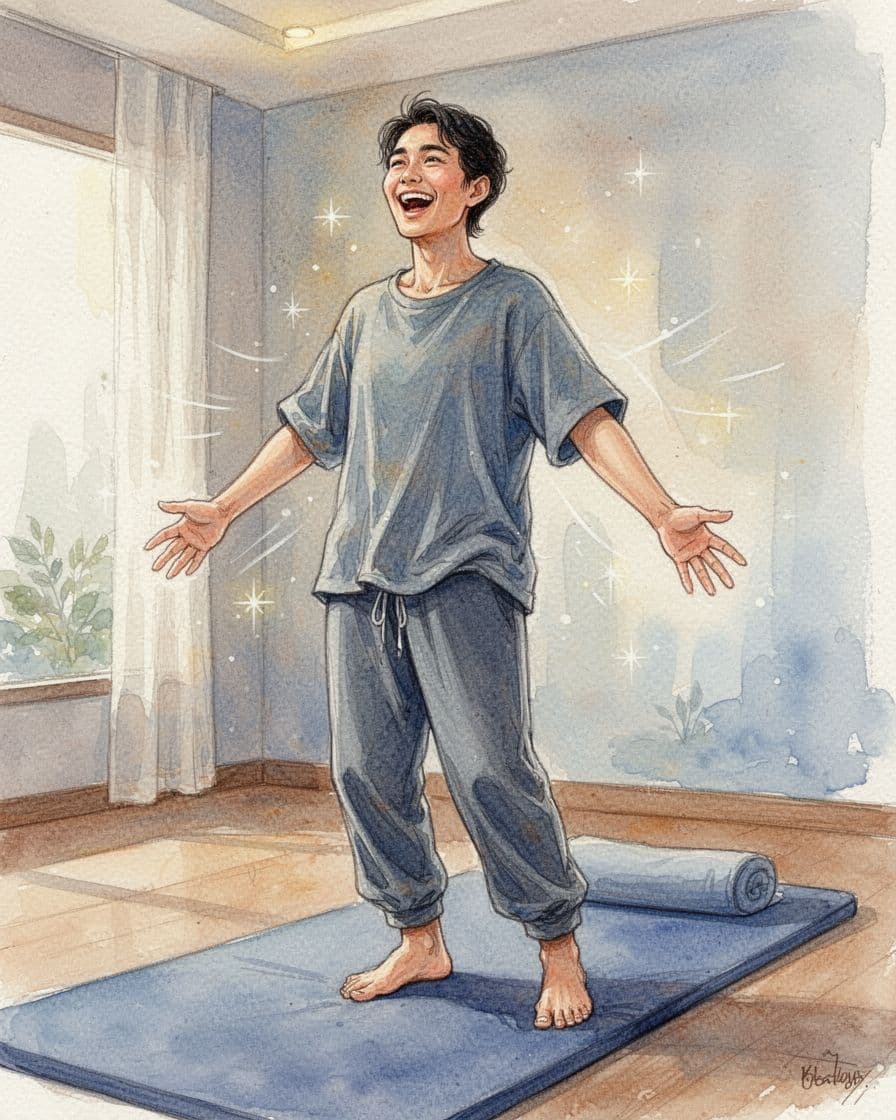
Breath plays a big role here. During a well-paced session, the stretches often follow natural exhalations. So instead of forcing the body open, the therapist works with its rhythm. That can make movement feel smoother and less defensive. In turn, you may leave with a sense of ease that feels grounded rather than floppy.
There’s also the simple fact of body awareness. When someone works carefully through your muscles and joints, you notice habits you had tuned out. Maybe one shoulder sits higher. Maybe your hips feel uneven. Maybe your whole back has been quietly tense for weeks. Once you feel those patterns, it’s easier to change how you sit, stand, and move after the session.
In short, Thai Massage can feel like both an exhale and a wake-up call. It calms the noise, then gives the body room to move again.
What current research says, and where the limits still are
Research available through 2024, which is the latest solid evidence currently accessible, gives Thai Massage a fair and encouraging picture. Studies suggest it may help with pain relief, flexibility, range of motion, and stress reduction. Some research also points to short-term gains in muscle recovery, ease of movement, and a shift toward a calmer nervous system response.
That said, the strongest support is still for short-term or near-term benefits, not sweeping long-term claims. For example, studies have found that Thai Massage can help some people with back, neck, and shoulder discomfort. Other work has shown improved leg or ankle movement after treatment, which fits with what many regular clients report. Stress markers have also gone down in some studies after sessions, compared with simple rest.
Still, this is where balance matters. Much of the research is based on small groups, older studies, or short follow-up periods. Methods also vary from one study to the next. One therapist’s style can differ a lot from another’s, and sessions aren’t always identical in pressure, pace, or length. So while the findings are promising, they don’t mean Thai Massage works the same way for everyone.
A careful takeaway looks like this:
- It may help with common muscle pain, stiffness, and stress.
- It may improve flexibility and range of motion, especially when tight muscles limit movement.
- It is not a cure-all, and it doesn’t replace medical diagnosis or treatment.
If pain is severe, new, worsening, or linked with numbness, injury, fever, or swelling, it’s smart to seek medical care first. The same goes for fractures, some heart or vascular issues, recent surgery, or pregnancy-specific concerns unless you’ve been cleared and the therapist is properly trained.
Thai Massage fits best as part of a wider picture of care. Think of it as support, not rescue. For many people, that support is meaningful. It can make the body feel more comfortable, the mind quieter, and movement easier to trust again.
What a Thai Massage session feels like, from the first stretch to the final rest
For many first-timers, Thai Massage feels unfamiliar at first, then surprisingly natural. You stay clothed, you rest on a mat, and the session moves like a quiet conversation between pressure and stretch. One moment feels grounding, the next feels like your body is being gently unfolded.
The best way to picture it is this: not a rushed workout, and not a sleepy rubdown either. A good Thai Massage session should feel clear, steady, and safe. Strong pressure can be part of the experience, but harmful pain should never be. If anything feels too sharp, too intense, or simply wrong, say so. Good communication is part of the treatment, not an interruption.
How to prepare before your appointment
A little prep makes the whole session easier. Since Thai Massage involves movement and stretching, wear loose, breathable clothes that let you bend comfortably. Think soft pants, a T-shirt, or other easy layers. Tight jeans, stiff fabrics, and anything restrictive can make the session less comfortable.
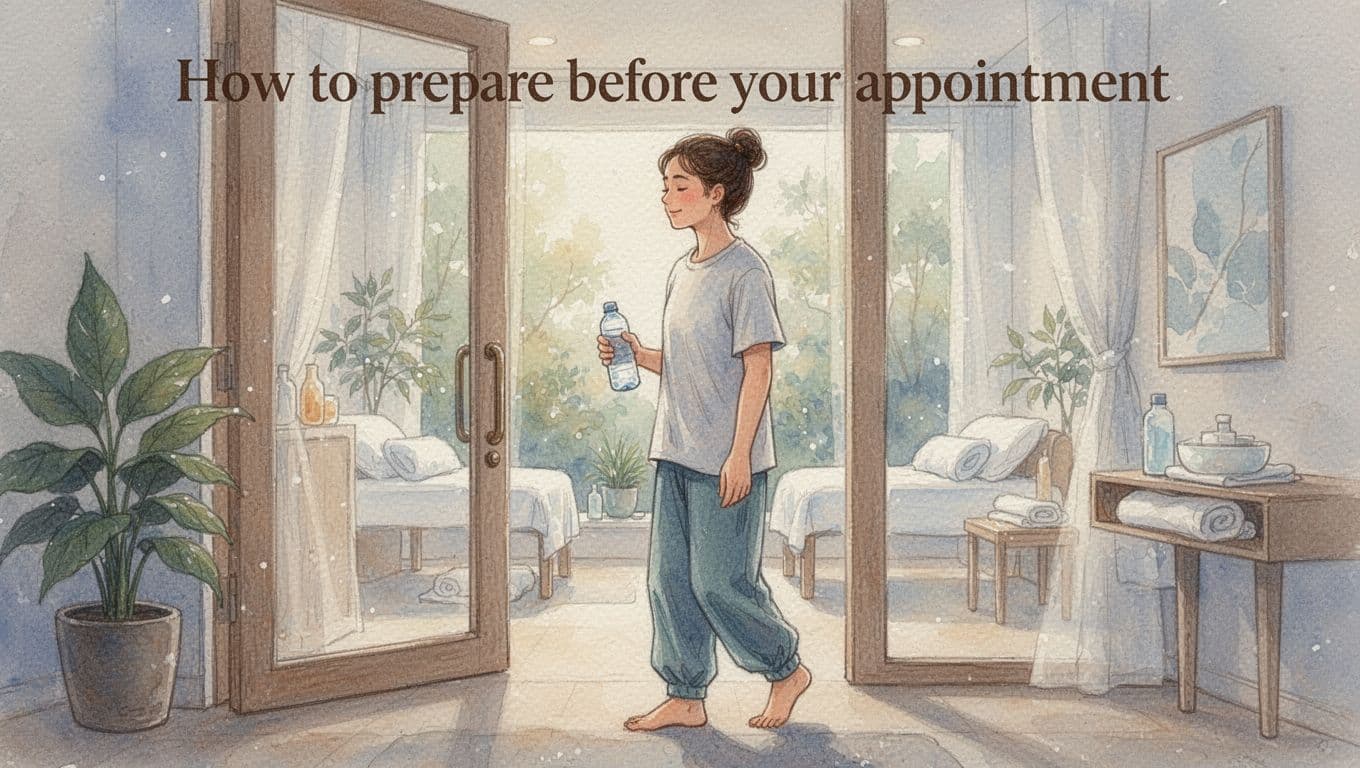
It also helps to time your meals well. Try not to arrive very hungry, but don’t come in right after a heavy meal either. A light meal or snack one to two hours before your appointment usually feels best, because deep pressure and twisting can feel awkward on a full stomach.
Plan to arrive a little early so you can settle in without rushing. Even 10 to 15 minutes can make a difference. That buffer gives you time to use the restroom, slow your breathing, and shift out of the noise of the day.
Before the session starts, share anything your therapist should know. Keep it simple and honest. Mention:
- Injuries or recent pain, especially in the neck, back, hips, knees, or shoulders
- Medical conditions, such as high blood pressure, joint problems, or nerve pain
- Pregnancy or recent surgery
- Areas you don’t want worked on
- Your pressure preference, whether you like lighter work or firmer pressure
That last point matters. In Thai Massage, firm pressure can feel productive, like a stretch that wakes up a stiff area. Harmful pain feels different. It tends to feel sharp, pinching, electric, or alarming. If you feel that kind of pain, speak up right away.
The session works best when you and the therapist communicate early, not after you’ve spent ten minutes bracing through discomfort.
What happens during the session, step by step
Most Thai Massage sessions begin with a short check-in. The therapist may ask how your body feels, where you hold tension, and how much pressure you prefer. Then you’ll lie on a padded mat, usually starting on your back, while the therapist begins with slow, warming contact.
Early on, the pressure often feels broad and steady. The therapist may press with palms and thumbs along the feet, legs, and hips, using rhythm rather than force. This part can feel like your muscles are being gently persuaded to let go, not pushed into surrender.
As the session builds, the work usually becomes more layered. Hands may give way to forearms or elbows on larger, tighter muscles, especially in the back, glutes, or thighs. Some therapists also use knees or body weight in a controlled way, which often feels deep but grounded. Done well, it doesn’t feel abrupt. It feels like a slow wave rolling through a tight area.
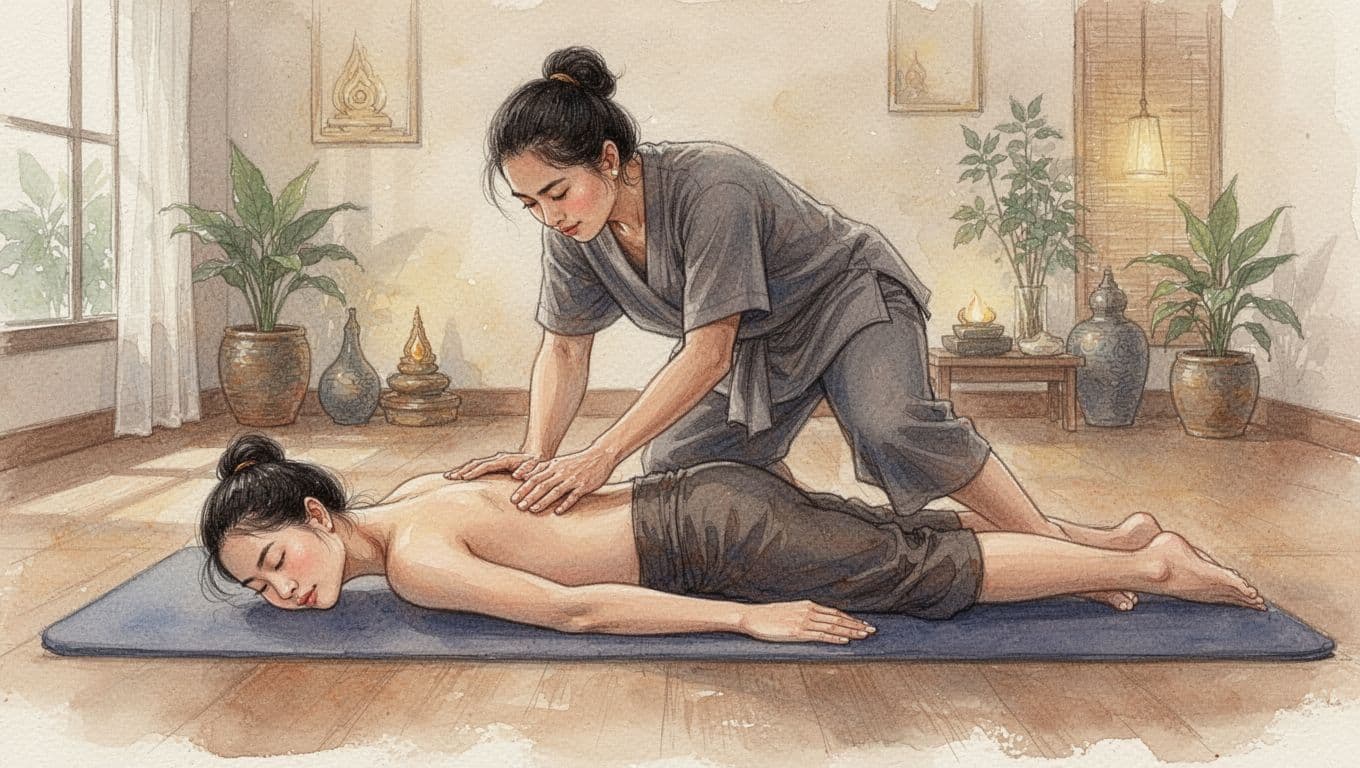
Then come the stretches. This is often the part people remember most. The therapist may guide your leg into a hip opener, lift an arm to open the shoulder, or rotate your torso in a gentle twist. You are not expected to help much. In many ways, Thai Massage feels like assisted yoga, where your body is moved with care while you stay as relaxed as possible.
During the session, you’ll likely change positions several times. A common flow includes:
- Lying on your back for feet, legs, hips, arms, and some shoulder work
- Turning onto your side for deeper hip, waist, and shoulder stretches
- Lying face down for the back, glutes, calves, and hamstrings
- Returning to a restful position as the pace softens near the end
Throughout all of this, keep communicating. A stretch can feel intense without being harmful. As a rule, strong pressure should feel purposeful, while harmful pain feels like your body is pulling away from it. If you start holding your breath, tightening your jaw, or wanting the therapist to stop, say something.
Near the end, the pace usually changes. The stronger work fades, the holds get quieter, and you may rest for a minute or two. That final stillness often feels surprisingly powerful, as if the body is catching up with all the space it just gained.
What you may feel after Thai Massage, and how to care for your body
Right after Thai Massage, many people feel a mix of looseness, warmth, calm, and clearer movement. You might stand up and notice your steps feel lighter. Your shoulders may sit lower. Your breath may seem deeper without effort.
Some mild soreness can also happen, especially if you were very tight to begin with. Think of it like the feeling after a good stretch class or a long walk after being still for too long. That kind of soreness is usually light and short-lived.

For the rest of the day, keep aftercare simple:
- Drink water and give your body time to settle
- Move gently, such as walking or light stretching
- Rest if you feel sleepy, because Thai Massage can quiet the nervous system
- Skip very hard workouts right away if your body feels worked
Most of all, pay attention to how you feel. Good post-session sensations include ease, softness, mild tenderness, and better range of motion. Not-normal discomfort is different. If you feel sharp pain, strong bruised pain, numbness, dizziness, or symptoms that worsen, contact the therapist and seek medical advice if needed.
A good Thai Massage should leave you feeling more at home in your body. Maybe not perfect, and not floating in a cloud, but steadier, longer, and more open than when you walked in.
How Thai Massage compares with other massage styles
Not all massage feels the same, and that matters when you’re booking with a clear goal in mind. Some styles invite you to melt into the table. Thai Massage, by contrast, asks your body to open, lengthen, and breathe. It can soothe you, yes, but it also feels like someone gently unwrinkled the whole map of your muscles.
If you’re choosing between Thai Massage and other popular styles, think about how you want to feel afterward. Do you want to drift home sleepy and soft, or stand up feeling lighter, taller, and more awake? That simple question usually points you in the right direction.
Thai Massage vs Swedish massage, gentle flow or active stretching
Swedish massage is the classic picture many people have in mind. You lie on a table, oils are used, and the therapist works with long, gliding strokes. The feel is smooth, flowing, and quiet, like warm water moving over tired muscles.
Thai Massage takes a different path. You stay clothed, usually rest on a mat, and the therapist uses compression, acupressure, and assisted stretches instead of oily strokes. Rather than smoothing over the body, Thai Massage works through it, bending, opening, and gently moving joints and muscles as a whole.
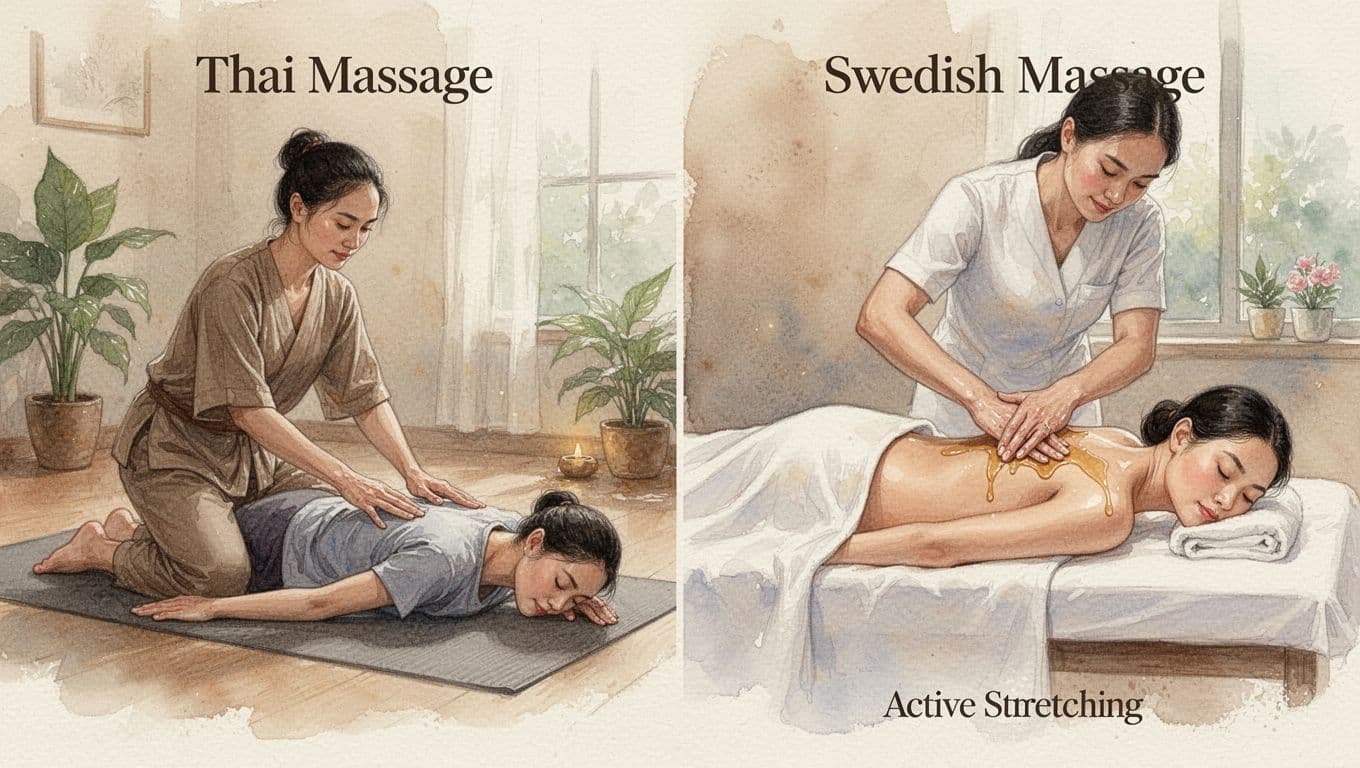
The choice often comes down to experience and purpose:
- Choose Swedish massage if you want pure relaxation, gentle muscle easing, and a calm, floaty finish.
- Choose Thai Massage if you want movement, body opening, and that loose, re-set feeling after stretching.
In other words, Swedish massage feels more passive. You sink in and let go. Thai Massage feels more like guided motion, almost like your body is being folded open one careful inch at a time. If your main goal is stress relief and softness, Swedish may suit you better. If you feel stiff, compressed, or stuck from daily life, Thai Massage may feel more rewarding.
Thai Massage vs deep tissue massage, full-body movement or targeted muscle work
Deep tissue massage and Thai Massage can both feel strong, but they are not trying to do the same job. Deep tissue usually focuses on specific problem areas, such as a knot between the shoulder blades, tight calves, or a stubborn band in the lower back. The work is often slow, firm, and direct.
Thai Massage is broader in feel. Instead of chasing one knot for much of the session, it moves across the whole body with pressure, rocking, and assisted stretching. A therapist may still spend more time on a tight area, but the session usually keeps a head-to-toe rhythm.
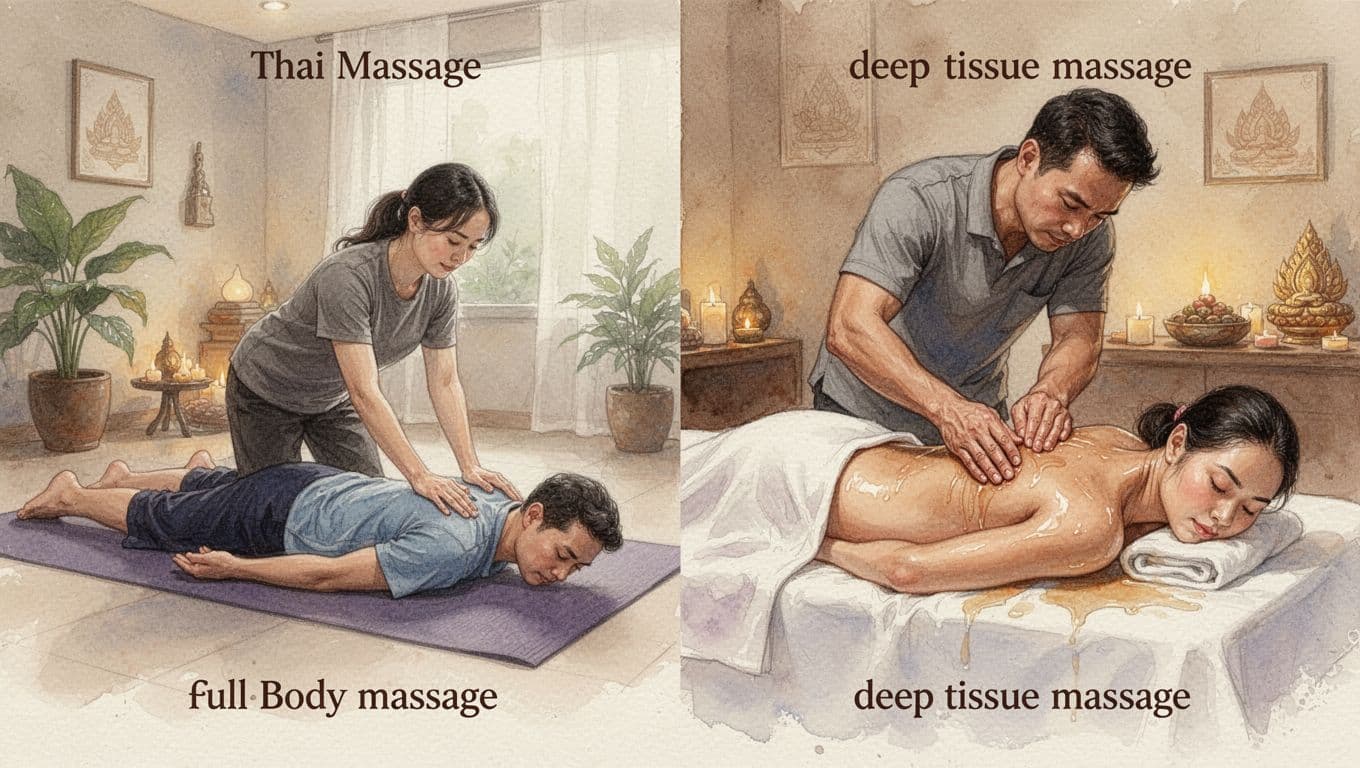
Here’s the clearest way to think about it. Deep tissue is like working a stubborn crease out of one corner of a shirt. Thai Massage is more like shaking the whole shirt out, stretching the fabric, and smoothing many folds at once.
That means:
- Deep tissue massage may fit best if you have chronic knots, muscle bands, or one area that keeps flaring up.
- Thai Massage may fit best if your whole body feels tight, heavy, or limited in movement.
Some people also find deep tissue more intense in a narrow, focused way. Thai Massage can feel intense too, but often in a more spacious, full-body way. You are not just getting pressure, you are getting motion.
If you want a session built around one stubborn trouble spot, deep tissue often makes more sense. If you want your whole body to move and open, Thai Massage usually stands out.
Popular Thai Massage variations you may come across
Thai Massage isn’t one single experience. Several variations keep the same roots but shift the feel, pace, and focus. Knowing the difference helps you book the style that matches your mood and your body’s needs.
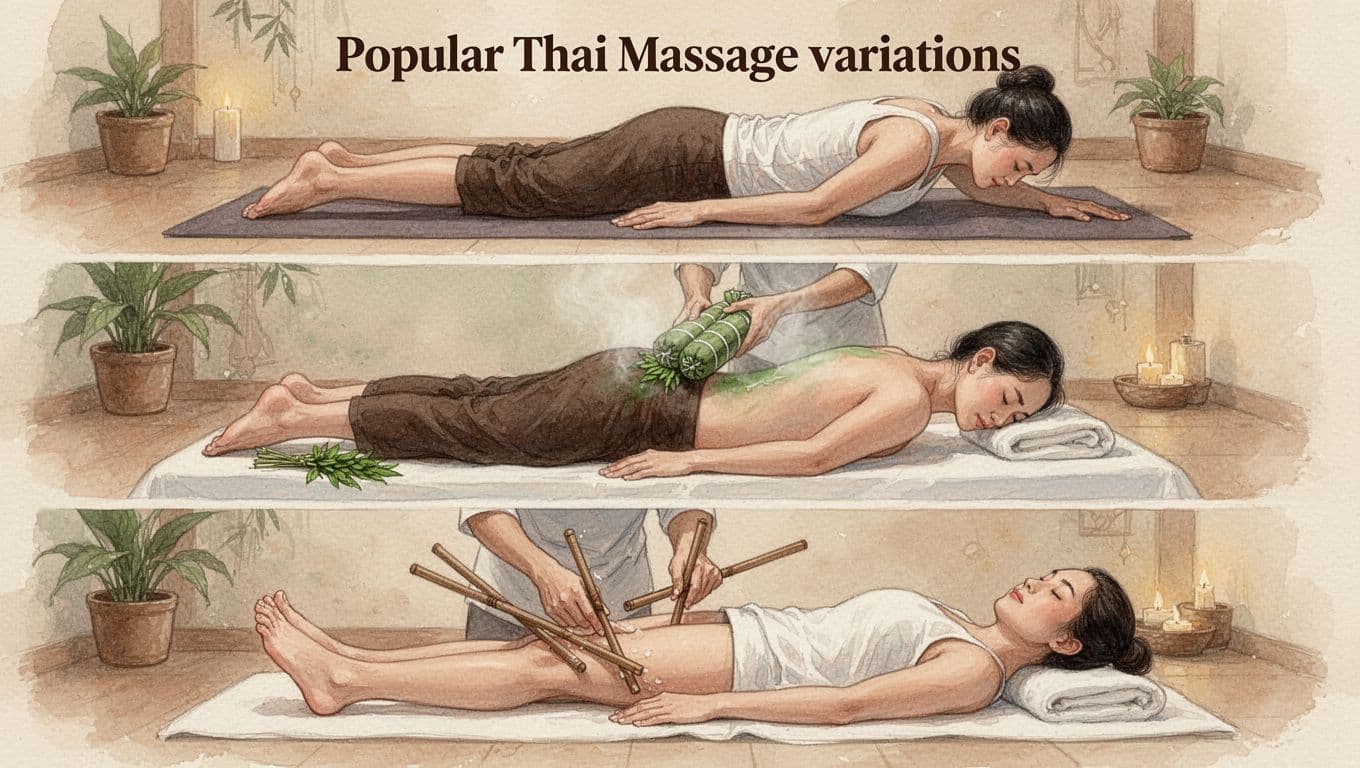
Traditional Thai Massage is the classic form. You stay clothed on a mat while the therapist uses palm pressure, thumb work, compression, and assisted stretches. This is the best fit if you want the full-body, yoga-like experience.
Thai herbal compress massage adds warm cloth bundles filled with herbs. The therapist presses or rolls them over the body, often after or between massage techniques. It feels warmer and more soothing, so it’s a good option when you want Thai bodywork with extra comfort.
Thai oil massage softens the classic format. It usually happens on a table, uses oil, and leans more toward flowing strokes than strong stretching. If traditional Thai Massage sounds too active, this version offers a middle ground.
Thai foot massage focuses on the feet and lower legs. It often combines pressure-point work, thumb pressure, and rhythmic movements, sometimes with a small wooden stick. This style suits tired feet, heavy legs, and anyone who wants a shorter, grounded treatment without full-body stretching.
Each variation keeps a Thai influence, but the feel changes a lot. Some are more active, some more calming, and some focus on one area rather than the whole body.
How to choose a great Thai Massage therapist and stay safe
A great Thai Massage session should feel like guided ease, not a test of how much discomfort you can take. The right therapist helps your body open bit by bit, like sunlight reaching a stiff room. The wrong one can make you brace, hold your breath, and leave feeling worse.
That is why skill and safety matter as much as technique. If you know what to look for, you can book with more confidence, speak up sooner, and walk into each session feeling informed instead of uncertain.
Signs you have found a skilled and trustworthy therapist
A good Thai Massage therapist shows their skill before the first stretch begins. They should have clear training, recognized certification, and enough hands-on experience to work with different bodies safely. If you have an old injury, limited mobility, or a special concern, they should be able to explain how they would adapt the session.
Just as important, the space should feel clean and calm. Fresh linens, tidy floors, clean hands, and good personal hygiene are not extras, they are basic signs of care. When a therapist pays attention to the room, they usually pay attention to your body too.
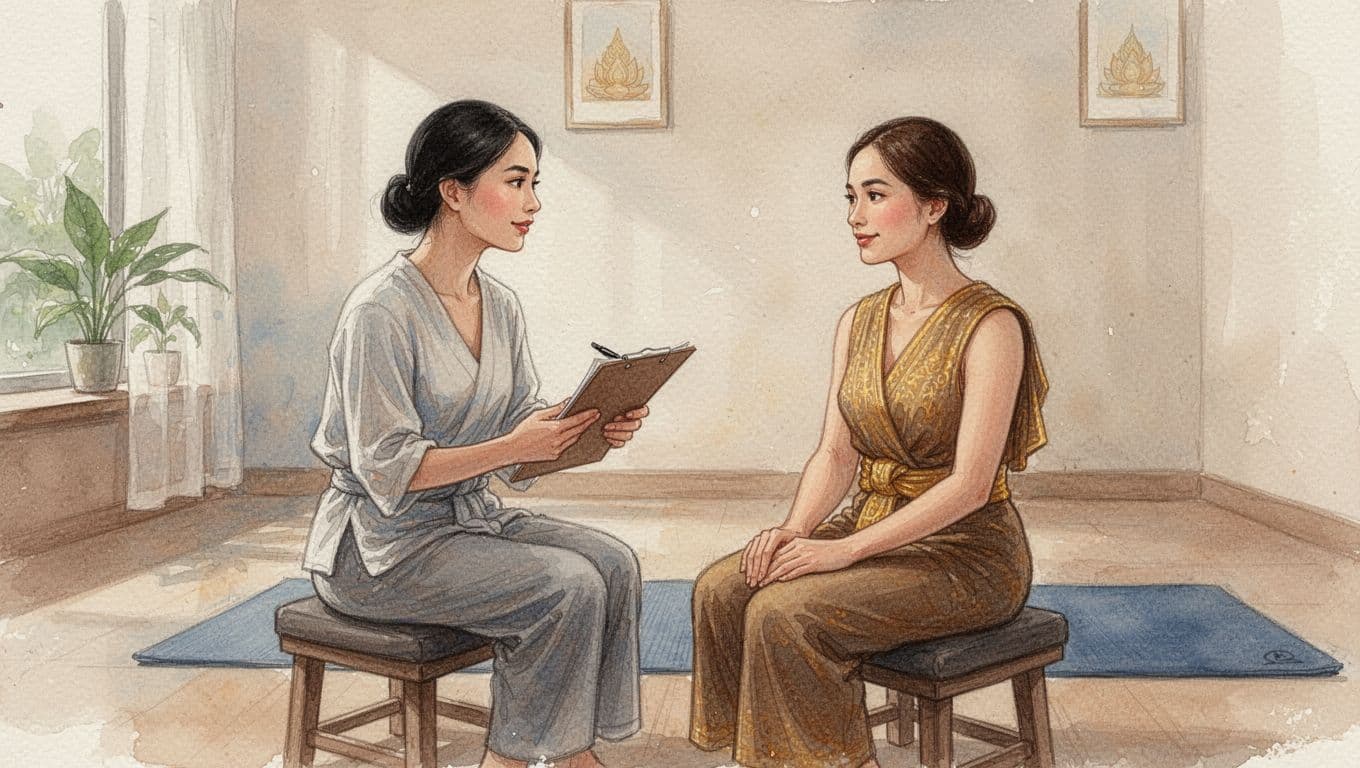
Watch how they communicate. A trustworthy therapist asks intake questions before starting, not halfway through. They should ask about pain, recent injuries, surgeries, pregnancy, medical issues, and areas you want them to avoid. That short talk tells you a lot. It shows they are thinking, not just following a routine.
Here are the clearest green flags to notice:
- They listen closely: They let you explain what hurts, what feels tight, and what you want from the session.
- They adjust pressure: If you say something is too much, they respond right away.
- They explain the process: They tell you what kind of pressure or stretch is coming next.
- They respect limits: They never force your body into a pose just because it is part of a sequence.
A skilled therapist works with your body, not against it.
This matters most during stretching. Thai Massage can feel deep, but it should not feel like your body is being pushed past its edge. A good therapist notices tension, resistance, and breath. If you tighten up, they ease back. If a stretch is too much, they change it. They do not chase a dramatic pose. They chase a safe result.
When Thai Massage may not be safe, or needs extra care
Thai Massage is helpful for many people, but it is not the right choice every time. Some situations call for a pause, lighter work, or medical clearance first. That is not a reason to fear it. It is just part of using bodywork wisely.
You should be cautious with Thai Massage if you have a recent injury, especially a sprain, fracture, muscle tear, or recent surgery. Strong pressure and stretching can irritate tissue that is still healing. The same goes for open wounds, skin infections, or a fever. When the body is fighting something off, massage is usually not the best idea that day.
Certain health issues also need special care. These include:
- Severe osteoporosis, because bones may be too fragile for stretching or heavy pressure
- Clotting issues or blood clot risk, because pressure may raise the chance of harm
- Some heart conditions, especially if your doctor has warned you about strain, circulation, or blood pressure shifts
- Pregnancy, especially in some stages, unless you are cleared and treated by someone trained in prenatal work
If you have a chronic condition, do not assume every therapist can adapt safely. Ask direct questions. Have they worked with your issue before? Do they avoid certain stretches or positions? Can they keep the work lighter and more focused?
The safest rule is simple: if your body feels medically fragile, inflamed, or unstable, get advice first. Thai Massage should support healing, not compete with it.
Simple tips for getting the most out of every Thai Massage session
Once you find the right therapist, a few smart habits can make each Thai Massage session work better. Start by matching the session to your goal. If you want stress relief, a gentler pace and a shorter session may be enough. If you want more flexibility or help with daily tension, a longer session often gives the therapist time to work through the whole body without rushing.
For many people, 60 to 90 minutes feels like the sweet spot. Shorter sessions can help a focused problem area, while longer ones give more room for full-body flow. If you are new to Thai Massage, start lighter and see how your body responds.
Frequency matters too. You do not need to book every few days. For general upkeep, many people do well with a session every few weeks. If you are especially stiff or stressed, weekly sessions for a short period may help, then you can taper down.
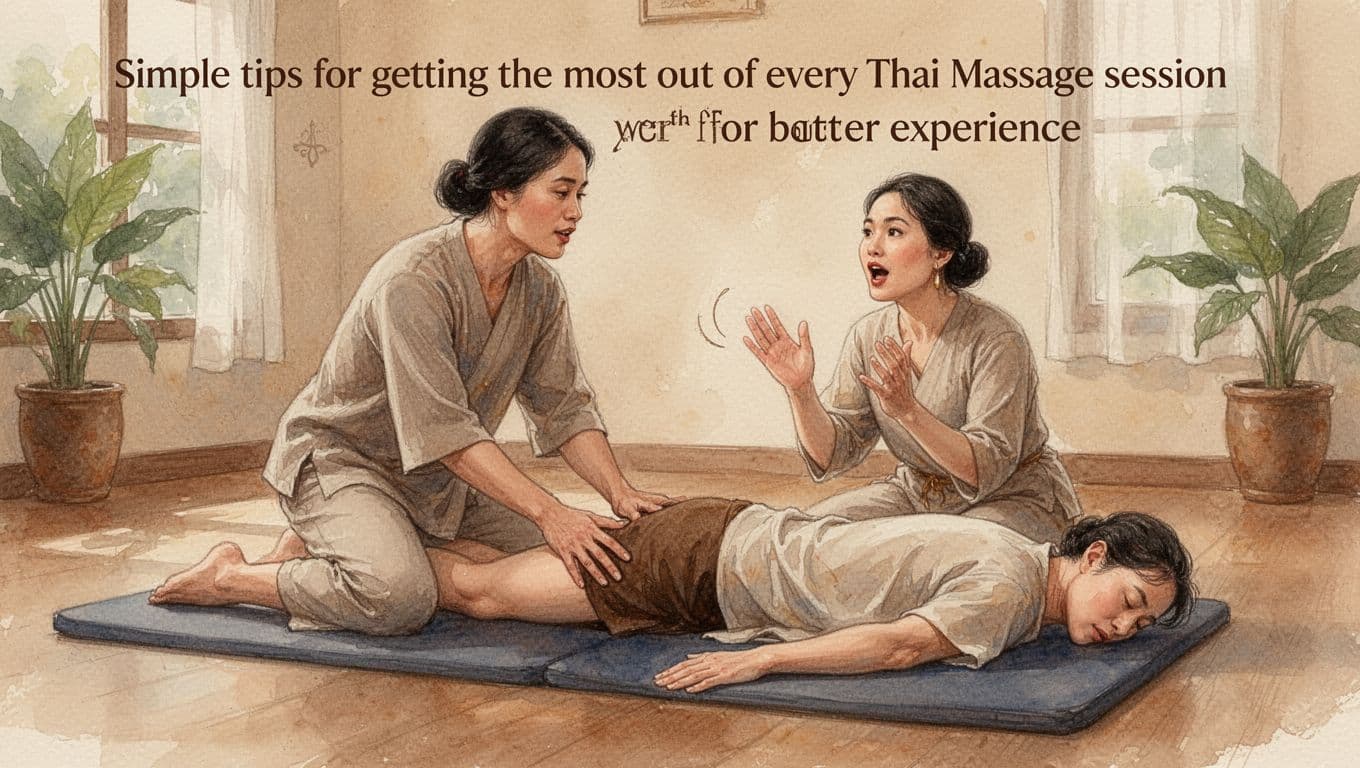
During the session, speak up early. Do not wait until a stretch feels wrong. If pressure feels sharp, if your breath catches, or if one move makes you tense, say so. Good Thai Massage is a two-way exchange. Your feedback helps the therapist fine-tune the work.
A simple way to think about it is this:
- Know your goal: Relaxation, mobility, or relief from daily tightness.
- Choose the right session length: Enough time for that goal without overdoing it.
- Communicate during treatment: Pressure should feel strong, but still safe.
- Pay attention after: Mild soreness can happen, but sharp pain is a red flag.
In the end, trust the signs. Pick a therapist with real training, clean standards, and calm communication. If they listen, adapt, and never force a stretch, you are likely in good hands. If your body has an injury, a medical condition, or a time when Thai Massage is not the best fit, stepping back is also a smart choice. Real care is not about pushing through, it is about knowing when support helps and when caution protects you.
Conclusion
Thai Massage stands apart because it blends pressure, stretch, and stillness into one clear, grounded experience. It isn’t just about soothing sore muscles. It also helps many people feel more open, more balanced, and more at ease in their own body. For stiff hips, tired legs, desk-bound shoulders, or a mind that won’t slow down, Thai Massage can offer real relief when it’s done with skill and care.
Just as important, it’s not the right fit for every moment or every body. Knowing what to expect, speaking up during the session, and choosing a well-trained therapist all shape the result. Research continues to support short-term benefits for stress, pain, and flexibility, while common sense still matters most when injury, illness, or medical concerns are involved.
At its best, Thai Massage feels like a quiet reset. Steady hands press, the body softens, a stretch opens across the back or hip, and breath returns to places that felt tight all day. Then you stand up feeling calmer, longer, and a little more awake.
Approach Thai Massage with curiosity and care. If the style suits your body and the therapist earns your trust, the session can feel less like a luxury and more like a way back to yourself.